Builder Sales Surge 28% While Resale Prices Dip: Two Markets, One Valley

If you only read the national headlines about Las Vegas real estate, you would think the market is treading water. Home prices down one month, flat the next. Inventory up, but not dramatically. Sales volume roughly matching last year's numbers.
That surface-level story misses something important that emerged from the July data: the Las Vegas housing market is not one market anymore. It is two. And the gap between them is widening in a way that creates real opportunity for buyers and sellers who understand the divergence.
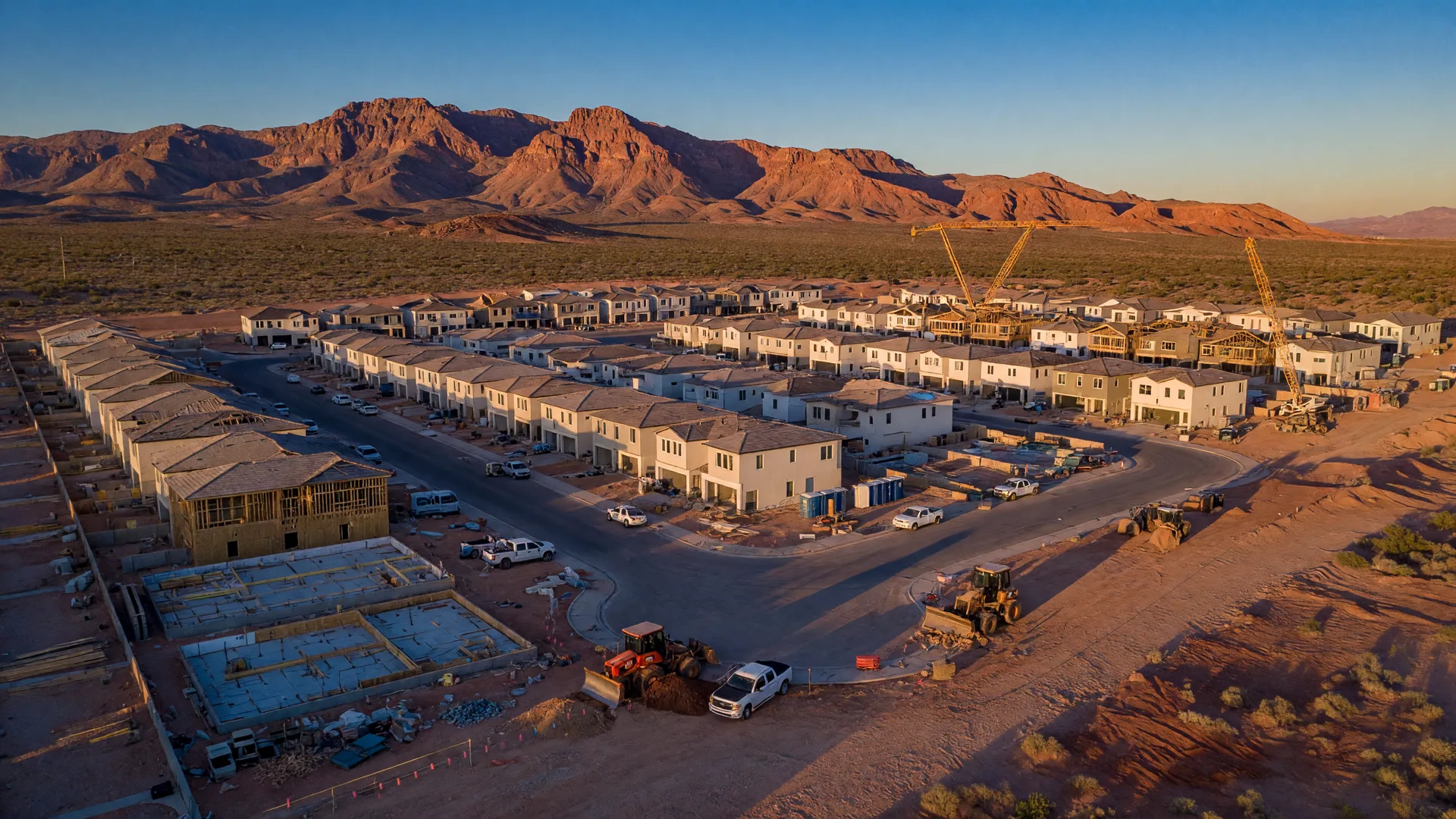
The Las Vegas Review-Journal reported on August 24 that homebuilders in Southern Nevada landed a 28 percent jump in sales in July compared to the same month a year earlier. That followed a separate August 6 report showing existing home sales inched up just 1.2 percent year-over-year while the median resale price slipped from $490,000 to $480,000 — a 2 percent month-over-month decline and a 1 percent dip from July 2025.
New construction is booming. Resale is balanced. Those are two very different markets operating inside the same valley at the same time, and the gap tells us where the Las Vegas market is heading.
Southern Nevada homebuilders landed a 28% jump in monthly sales in July 2026, while existing home sales inched up just 1.2% and median resale prices dipped to $480,000.
The Builder Boom: What Is Driving 28 Percent Growth?
A 28 percent year-over-year increase in new home sales is not a blip. It is a structural signal that buyers are voting with their wallets, and they are choosing new construction at a pace that has not been seen in years.
Several factors explain the surge. First, builders have adapted to the current interest rate environment. At roughly 6.25 to 6.55 percent for a 30-year fixed mortgage, many buyers are stretching to afford monthly payments. Builders have responded by offering aggressive incentives — rate buydowns that lower effective mortgage rates by a full percentage point or more, closing cost credits, and upgraded finishes at no additional charge.
A buyer who signs a contract with a national builder in Summerlin or Henderson today can often get a 2-1 buydown that reduces their rate to the mid-4 percent range for the first year and the low-5 percent range for the second year, with a conventional rate kicking in after that. That is a difference of hundreds of dollars per month at a price point where every dollar matters.
Second, builders are building what buyers actually want. The floor plans being offered in 2026 favor open layouts, flex spaces that double as home offices, and outdoor living areas that acknowledge the Las Vegas climate. Master-planned communities like Cadence in Henderson, Meriden in the southwest valley, and the expanding neighborhoods in Centennial Hills are offering amenities — parks, pools, walking trails, planned schools — that competing resale properties often cannot match.
Third, the price gap is narrowing. Builders delivered over 12,500 single-family new builds in 2025, the highest since 2007, and that pace has continued into 2026. With more inventory, builders are keeping price increases modest. The premium for a new construction home over a comparable resale property has shrunk, making new build financing more attractive on a monthly payment basis.
The Resale Reality: Steady but Softening
While builders are celebrating, the resale market is telling a more measured story. The 2,046 existing single-family homes that closed in July represent a 1.2 percent year-over-year increase — positive, but not a breakout. The median sales price of $480,000, while still historically elevated, marks a retreat from the $490,000 high set in May and June of this year.
The Review-Journal's August 6 report noted that newly listed single-family homes rose 3.3 percent year-over-year and available inventory increased 4.1 percent. Southern Nevada ended July with 3.6 months of supply, firmly in balanced-market territory.
What that means in practice: 43.4 percent of all active listings have already reduced their asking price. The median days on market is 51 days. About 57.5 percent of sales close below the original list price. These are not crash conditions — they are market-normal conditions after a period of extreme seller advantage.
For sellers who have owned their homes for three years or more, these conditions are manageable. Prices remain well above pre-pandemic levels. The homeowner who bought in 2019 for $350,000 and sells today at $480,000 has still gained $130,000 in equity, even with the recent pullback from the peak.
But for sellers who bought at the peak in 2021 or 2022 — or who need to sell quickly because of a job relocation, divorce, or financial pressure — the current market requires discipline. Price reductions are common because overpriced listings sit while buyers gravitate to the homes that reflect current market conditions.
43.4% of all active listings in Las Vegas have already reduced their asking price. The median days on market is 51 days, with 57.5% of sales closing below the original list price.
Employment Fundamentals Support Both Markets
What makes the July housing data especially significant is that it arrived during a period of strong employment growth. The Review-Journal reported on August 20 that the Las Vegas area added 2,300 jobs from June to July, with state officials describing the labor market as "steady." Nevada's unemployment rate dropped to 5 percent as of August, with Las Vegas leading the state's job growth.
Year-over-year job growth statewide was just over 1 percent, and the Las Vegas metro area has now added more than 25,000 jobs over the past twelve months. When employment is growing and housing demand remains steady, a price dip of 2 percent is not a correction — it is a recalibration.
The jobs are coming from diverse sectors, too. Technology employment in Las Vegas has grown 4.2 percent annually, the fastest rate in the country. Healthcare continues to expand. Logistics and distribution infrastructure is growing. And with over $30 billion in active or planned construction projects — Brightline West, the Oakland A's ballpark, the Hard Rock transformation of The Mirage — the construction sector alone now employs approximately 85,000 workers, up 4.9 percent year-over-year.
When buyers have jobs, they buy homes. The question is not whether demand exists — it is whether the available housing stock matches what buyers want at a price they can afford. And that is exactly where the divergence between new construction and resale becomes most visible.
What the Divergence Means for Buyers
For buyers, the two-market dynamic is arguably the best news in years. The builder surge means there is ample supply of new, energy-efficient homes with modern floor plans, often in master-planned communities with amenities that add daily quality of life. And the competitive pressure among builders means the incentives are real.
I have talked to buyers this month who locked in effective interest rates below 5 percent through builder buydowns — a full point and a half below market rates. On a $500,000 loan, that is a savings of roughly $450 per month. Over the life of a 30-year mortgage, that difference exceeds $160,000.
The resale market, meanwhile, offers a different kind of opportunity. Homes that would have sparked bidding wars in 2022 are now sitting long enough for buyers to conduct thorough inspections, negotiate repairs, and even ask for seller concessions. In July, many sellers agreed to cover closing costs or contribute toward rate buydowns to get their homes sold.
For buyers in Henderson, Summerlin, and Centennial Hills, the choice between new construction and resale has never been more balanced. New builds offer incentives and modern design. Resale properties offer established neighborhoods, mature landscaping, and often larger lots. The right choice depends on your timeline, your budget, and whether you value customization over immediate move-in availability.
What I tell every buyer I work with: bring a complete list of what matters most to you — school district, commute time, lot size, monthly payment target, move-in timeline — and we will evaluate both new construction and resale against that list. The market is not forcing you into one category anymore. You have options.
What the Divergence Means for Sellers
For sellers, the two-market dynamic demands a clear-eyed assessment of where your property sits in the competitive landscape.
If you are selling a home in a newer master-planned community, you are competing directly with the builder down the street who is offering rate buydowns and upgraded finishes. That means your pricing needs to be aggressive, your presentation needs to be flawless, and you need to offer concessions that match what the builder is offering — or find a differentiator that the builder cannot match, such as a premium lot, mature landscaping, or a finished backyard.
If you are selling an established home in a desirable school district or a neighborhood with no nearby new construction, your competitive position is stronger. Buyers who prefer mature trees and established communities are not served by new builds, and those buyers are often willing to pay a premium for location over newness.
But whether you are competing with builders or with other resale sellers, one principle applies in both cases: the market in 2026 rewards strategic pricing and professional marketing. Overpricing is the single fastest way to turn a 45-day sale into a 120-day price reduction, by which point the property carries a stigma that requires an even deeper discount to overcome.
My philosophy as a listing agent is rooted in the same approach I have used for thirty years: price it right from day one, stage it to compete with the best properties in its price range, and market it to the widest possible audience. My partnerships with Zillow, HomeLight, Veterans United, Google, and Dave Ramsey's referral network put every listing in front of more than 42 million qualified buyers. In a two-market valley where competition for buyer attention is fierce, that reach is not optional — it is essential.
The Data Story beyond July
One month of data is a data point, not a trend. But July fits a pattern that has been building all year.
Builder activity has been ramping up steadily since the beginning of 2026. The 12,500 single-family new builds delivered in 2025 created an inventory pipeline that continues to feed through 2026. As builders complete and release new phases, the supply of new homes keeps growing.
Resale inventory has also grown, but at a more moderate pace. The 3.6 months of supply in July is almost double the inventory levels of early 2022, but well below the 6-plus months that would indicate a buyer's market. The market is balanced, with a slight lean toward buyers — estimated at roughly 6 out of 10 in buyer leverage, according to local market analysts.
What happens next depends on two variables: interest rates and employment. If rates drift down toward 5.5 percent in the second half of 2026, as some forecasters predict, the resale market will likely heat up as more buyers qualify for financing. If rates hold in the 6.25 to 6.5 percent range, builders will continue to dominate new sales through their incentive advantage.
Employment is the wild card that most national analysts miss. Nevada has led the nation in job growth for nine consecutive months. That kind of structural employment expansion creates a floor under housing demand that does not exist in markets where the economy is contracting or stagnant. As long as Las Vegas keeps adding jobs at the current pace, any dip in prices is temporary — a reset, not a reversal.
Nevada's unemployment rate dropped to 5% in August 2026, with Las Vegas leading state job growth. The metro area has added over 25,000 jobs in the past twelve months.
The Bottom Line
The Las Vegas housing market in late August 2026 is a study in contrasts. New home sales are surging 28 percent as builders offer aggressive incentives and modern product. Resale sales are steady but prices are softening as inventory grows and buyers gain leverage. Employment numbers remain strong, population growth continues, and the long-term outlook for the valley remains positive.
For buyers, this is the most advantageous moment in years. Whether you choose new construction in Centennial Hills or an established home in Henderson, you have negotiating power, selection, and time that simply did not exist in 2021 or 2022.
For sellers, the winning strategy is straightforward: price competitively, present professionally, and market nationally. The days of putting a sign in the yard and waiting for multiple offers are over. In their place is a market where the prepared and the strategic earn full value, and everyone else chases the market downward.
I have navigated Las Vegas real estate through the dot-com crash, the 2008 financial crisis, the post-pandemic frenzy, and every cycle in between. The two-market dynamic we are seeing in 2026 is unusual, but it is not alarming. It is a mature, functioning market where information and strategy determine outcomes.
If you are thinking about buying or selling in Las Vegas, Henderson, Summerlin, or Centennial Hills, I would welcome the chance to help you make sense of the data and build a plan that fits this moment. The valley is growing, the economy is diversifying, and opportunity is real — but only for those who understand how the two markets work together.
For Agent Image / WordPress (tmtluxury.com)
New Home Sales Jump 28% in Las Vegas While Resale Prices Soften to $480K
Las Vegas builders saw a 28% surge in July sales while resale prices dipped 2%. A data-driven look at the two diverging markets inside the valley.
/las-vegas-new-home-builder-sales-july-2026
Reframes the slug around the builder angle rather than the divergence angle to avoid duplicate content signals across domains.
For Lofty CRM
Builders Surge, Resale Slips: Vegas Has Two Markets
New home sales jumped 28% while resale prices dipped to $480K. Here is what the Vegas divide means for your next move.
/vegas-builder-resale-divergence
Short, punchy, brand-forward title and description optimized for Lofty blog posts that double as email drip campaigns.
Over 30 years of Las Vegas real estate experience. Master Certification in Negotiation. Strategic partnerships with Zillow, HomeLight, Veterans United, Google, and Dave Ramsey's referral network. Las Vegas, Henderson, Summerlin, and Centennial Hills.
Full Bio
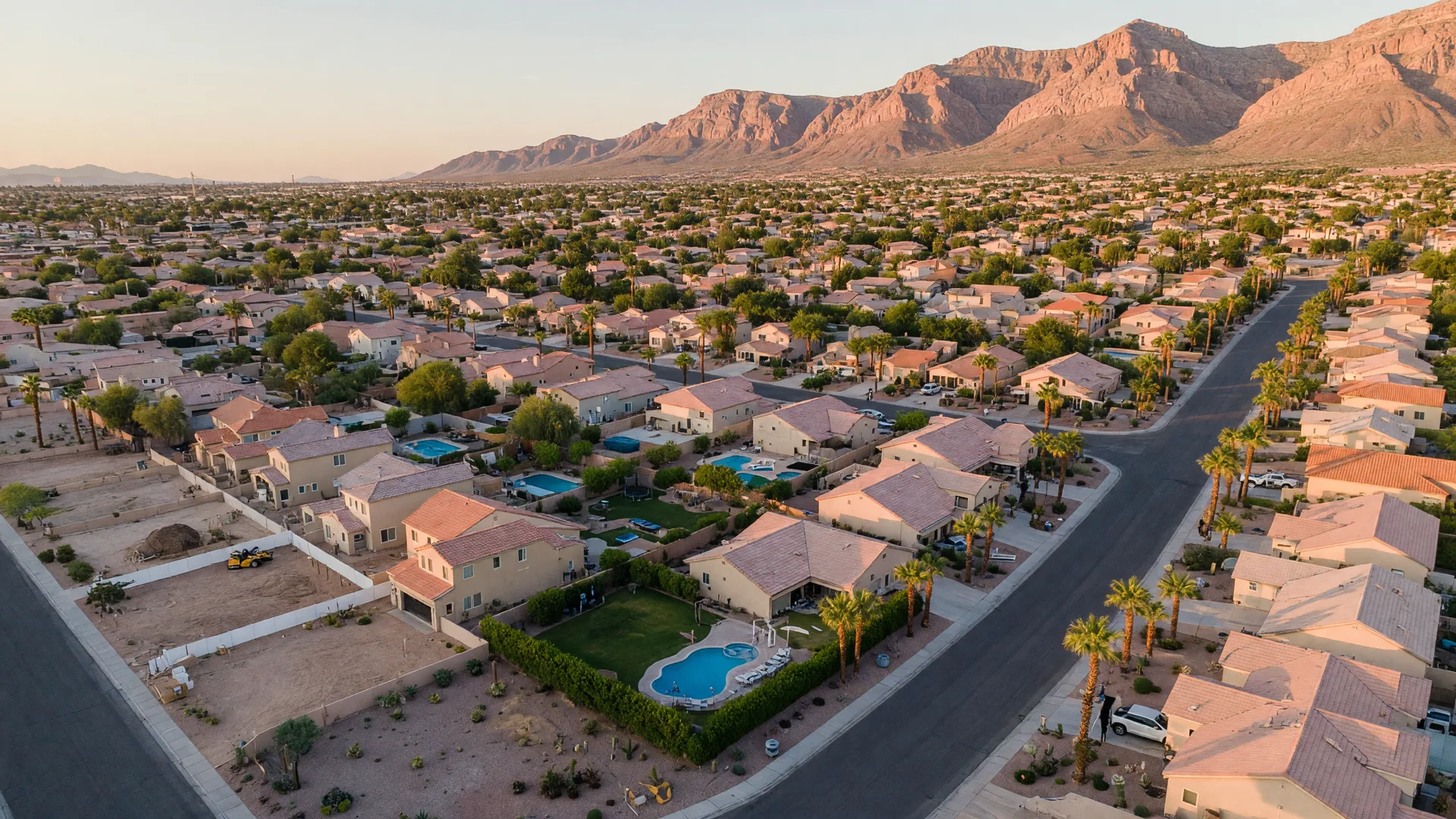
Two markets, one valley. Which one fits your goals?
Javier tracks both the builder and resale markets daily. Schedule a consultation to discuss which path makes sense for your next move in Las Vegas, Henderson, Summerlin, or Centennial Hills.
Talk to Javier