Las Vegas Home Sales Hold Steady as Inventory Surges Past 15,000 in August 2026

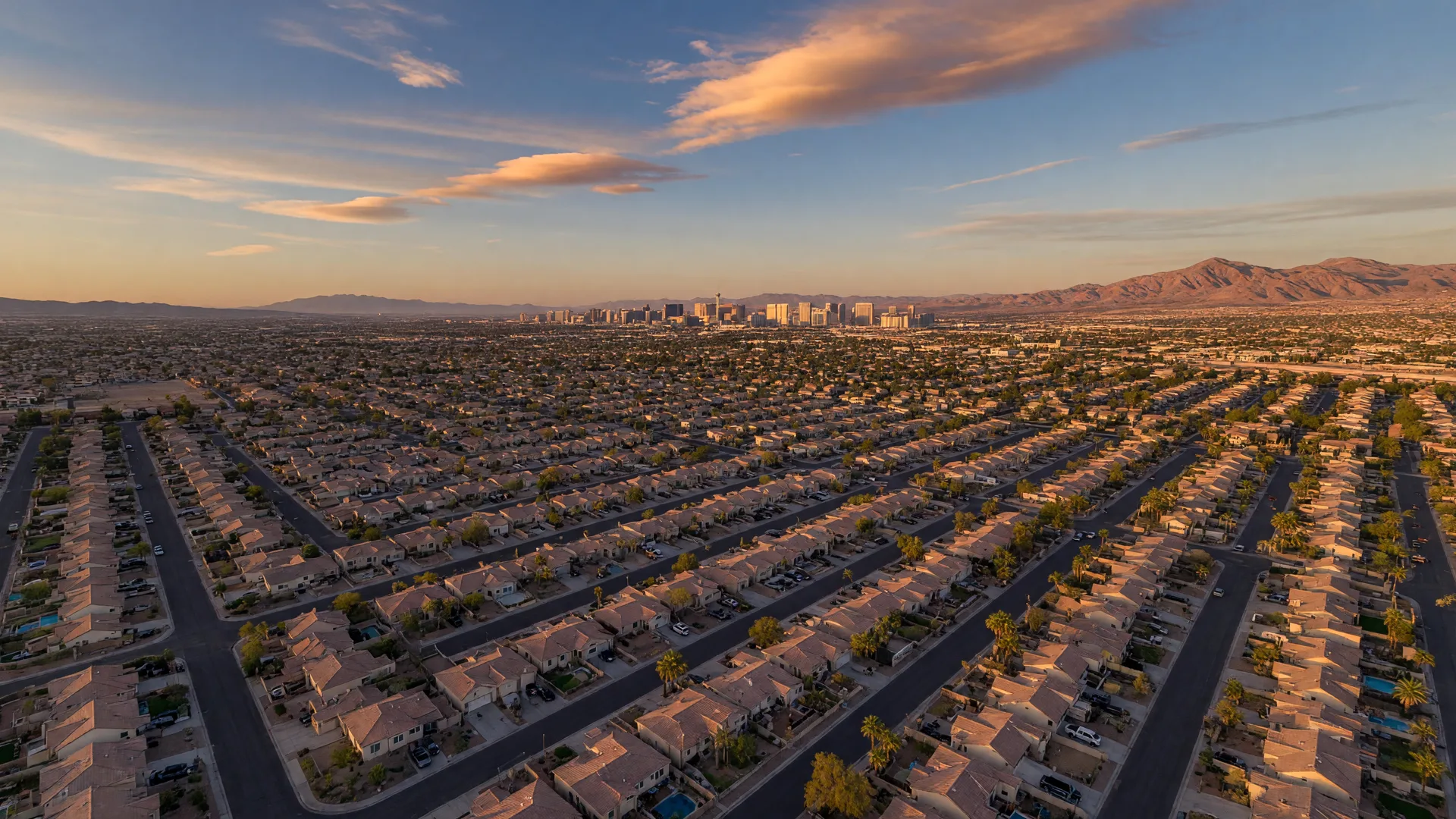
If you are watching the Las Vegas housing market from the outside, the headlines in August 2026 can feel contradictory. Home prices are dipping. Inventory is surging. Sales are barely inching up. Mortgage rates remain elevated. Yet the market is not crashing, not stalling, and not overheating. So what is actually happening?
The answer, based on the latest data from the Las Vegas Review-Journal and local multiple listing service reports, is that the Las Vegas market is maturing. After two years of dramatic swings from pandemic-era frenzy to post-rate-hike recalibration, the valley is settling into something that looks a lot like a functional, balanced market. Here is what the August numbers tell us and what they mean for buyers, sellers, and investors right now.
The Numbers That Define the August Market
Let us start with the headline data from July 2026, the most recent full-month snapshot available as of late August.
- Median single-family home price: $480,000, down 1 percent year-over-year and down roughly $10,000 (2 percent) from the prior month.
- Condominium and townhome median: $290,000, holding flat month-over-month.
- Existing home sales: 2,046 single-family homes sold in July, up 1.2 percent year-over-year.
- Active inventory: Approximately 15,141 listings, a level not seen since before the pandemic.
- New listings in mid-August weekly data: 1,103, still elevated compared to the same period in 2025.
- Days on market: Rising to about 30 days, up from 27 earlier in the year.
- Thirty-year mortgage rate: Continued upward pressure, keeping affordability stretched for many buyers.
This is not a market in freefall. It is a market in transition. The price decline, while worth noting, is modest and concentrated in specific segments. Inventory is building, but from a historic low baseline. Sales are essentially flat, which in a rising-rate environment is more resilient than it sounds.
Inventory Tells the Real Story
The most significant shift in the 2026 Las Vegas market is the inventory build. Active listings have more than doubled from their pandemic-era lows. At 15,141 homes, buyers have more choices than they have had in four years. That is a structural change, not a seasonal blip.
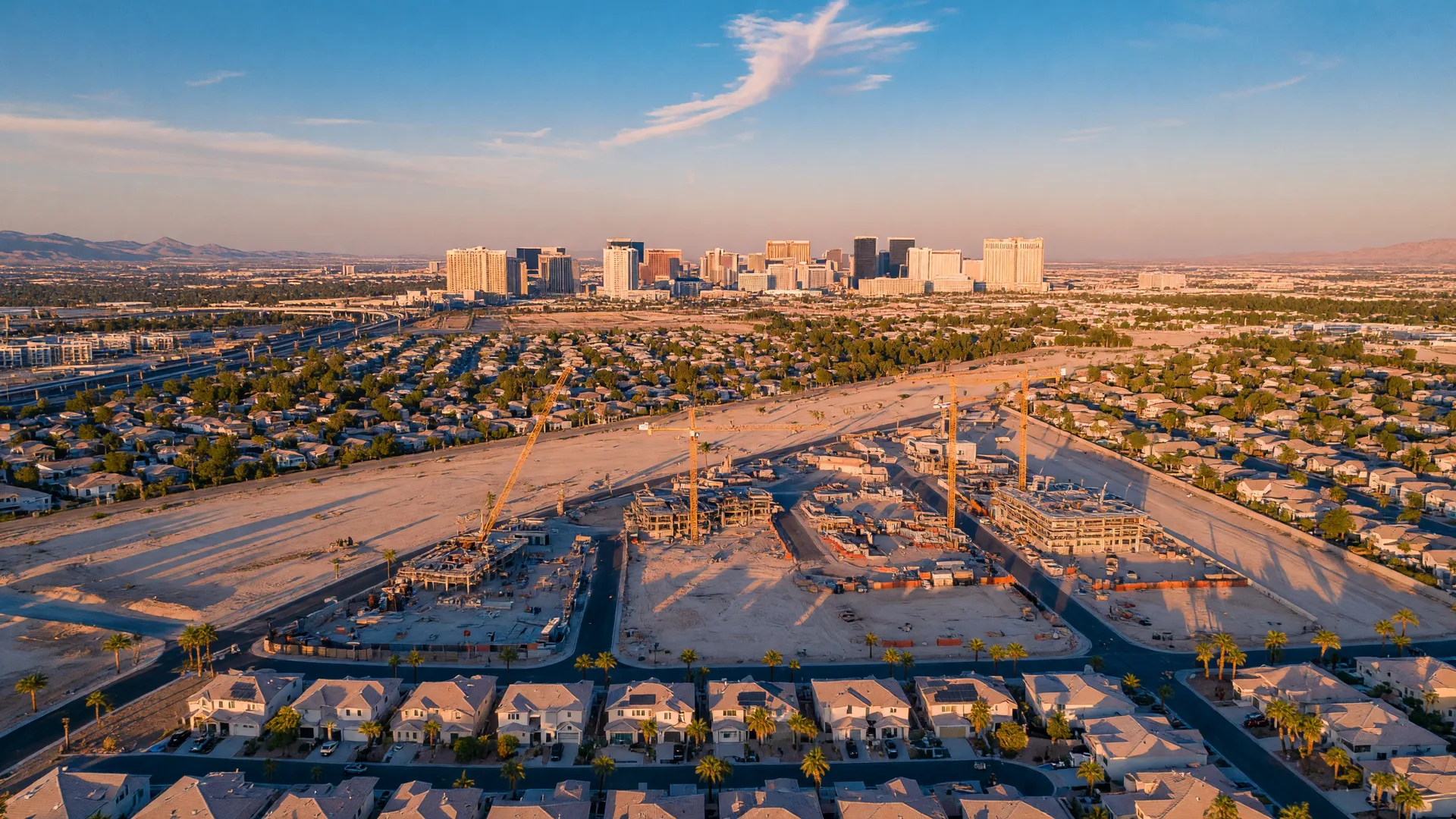
New listings remain elevated. The mid-August weekly figure of 1,103 new properties coming to market reflects sellers who have been waiting on the sidelines finally deciding to list. Some of that is pent-up supply from homeowners who postponed moves during the rate spike. Some is new construction inventory hitting the market. Some is an early signal from investors who bought during the boom and are now testing exit liquidity.
For buyers, this inventory build is the single most favorable development in years. The days of writing offers on five homes before getting one accepted are, in most price ranges, behind us. Sellers are negotiating. Price reductions are common. Contingencies are becoming negotiable again.
For sellers, the message is clear: the days of pricing your home 10 percent above comps and waiting for a bidding war are over. Every property now competes not just with the home down the street, but with a pool of 15,000 other listings. Pricing discipline, professional presentation, and strategic marketing are not optional. They are the difference between a 30-day sale and a 90-day stale listing.
Where the Price Dips Are Hitting
The $480,000 median represents a real but contained shift. If we zoom in on the sub-markets, the picture is more nuanced.
In Summerlin, the higher-end master-planned communities are holding value better than the valley average. Demand remains strong from relocating professionals and California buyers who see Summerlin's schools, amenities, and proximity to the Red Rock conservation area as worth paying a premium for. Properties priced below $1 million in Summerlin's established villages are still seeing multiple offers within the first two weeks.
In Henderson, the story is more varied. Neighborhoods closer to Lake Las Vegas and the Anthem area are maintaining pricing stability. The lower-priced entry-level segments of Henderson, however, are seeing more price sensitivity. First-time buyers in Henderson's sub-$400K tier are pulling back as mortgage rates bite.
In Centennial Hills, the price dip is more noticeable. This is a neighborhood where many buyers stretched their budgets during the low-rate era, and the combination of higher monthly payments and longer commutes to the employment core is cooling demand faster than in closer-in neighborhoods.
The luxury tier, defined broadly as homes above $1 million, tells its own story. The luxury median now sits at $1.2 million, up nearly 60 percent since 2019. That long-term appreciation has created a wide gap between sellers who bought before the pandemic and sellers who bought at the 2021 peak. The former group has massive equity and can price to sell. The latter group is often underwater on carrying costs and reluctant to reduce their ask, which contributes to the price trims we are seeing in that segment.
The Mortgate Rate Squeeze Is Aging
The 30-year mortgage rate remains the single biggest headwind for the housing market nationwide, and Las Vegas is not immune. Every percentage point increase in rates prices roughly 10 to 15 percent of potential buyers out of the market. At current levels, affordability is a genuine constraint, particularly for first-time buyers who do not have existing home equity to roll into their next purchase.
However, there is a counterpoint worth acknowledging: the buyers who are in the market right now are serious, qualified, and committed. There is very little speculative activity. Cash buyers remain active, especially in the luxury segment where more than 60 percent of February 2026 transactions were all-cash. These are end users and long-term investors, not flippers or speculators. That is healthier for the market over the long run.
For sellers, the rate environment means that buyer pool is smaller but more serious. Offers that come in are more likely to close. The risk of a buyer backing out due to financing issues is lower than it was during the peak of the low-rate frenzy.
Brightline West and the A's Keep Reshaping the Horizon
Beyond the monthly market statistics, two major infrastructure projects are quietly reshaping how investors and relocating families perceive Las Vegas as a long-term destination.
Brightline West, the high-speed rail project connecting Las Vegas to Southern California, continues to move forward despite well-documented financial challenges at Brightline's Florida operation. Physical construction is underway at the Las Vegas station site, with a parking garage rising. Siemens has begun manufacturing the AP220 trainsets in New York. The project has secured $3 billion in federal grants and $2.5 billion in private activity bonds, though the total funding gap remains significant at an estimated $15.5 billion. The August 2026 departure of Brightline West's president adds a layer of uncertainty, but the federal commitment and physical build timeline suggest this project is proceeding, albeit slowly.
For the housing market, the Brightline West project matters because it reduces the effective distance between Las Vegas and Los Angeles. When completed, the rail line will turn a four-hour drive into a two-hour train ride. That shift expands the pool of potential Las Vegas home buyers to include Southern California professionals who can commute to Los Angeles a few days per week while living in a lower-cost, no-state-income-tax environment.
The Oakland Athletics' stadium development is advancing as well. Clark County has approved plans for a Bally's plaza, parking garage, and theater surrounding the ballpark site at the Tropicana location. A potential buyer has expressed interest in Bally's $1.1 billion development project. The A's relocation brings not just year-round sports activity but the kind of national attention that sustains relocation interest from outside the market.
Job Growth Is Steady, Not Explosive
Las Vegas added 25,600 jobs over the past year through June 2026, a 2.2 percent increase. The gains were concentrated in trade, transportation, utilities, hospitality, and construction. Tech employment in Nevada is projected to grow 4.2 percent in 2026, the highest rate of any state according to the CompTIA report covered by the Review-Journal.
That job growth matters because it creates housing demand organically, without relying on speculative investor activity. Every new healthcare worker, every new tech professional, and every new construction employee who moves to Las Vegas needs a place to live. Most rent first and buy later. That pipeline of future buyers is the foundation for sustainable demand in the years ahead.
What the Maturing Market Means for You
If you are a buyer in Las Vegas, Henderson, Summerlin, or Centennial Hills right now, the August 2026 data is broadly encouraging. You have inventory to choose from. You have negotiating leverage. You have time to conduct due diligence. The days of frantic, 24-hour decision windows are over in most price ranges.
The trade-off is that mortgage rates are higher, which means your monthly payment buys less home than it would have two years ago. The solution is strategy, not avoidance. Seller concessions, rate buydowns, adjustable-rate products with longer fixed periods, and down payment assistance programs can all bridge the gap between today's rates and your long-term homeownership goals.
If you are a seller, the August market demands a disciplined approach. Overpricing is the most expensive mistake you can make in this environment. Homes that are priced at or slightly below market value, staged professionally, and marketed to a national audience are still achieving strong results. Properties that carry a premium that the data does not support are sitting for 60-plus days and eventually selling for less than they would have with a realistic starting price.
If you are an investor, the maturing market creates acquisition opportunities that did not exist during the frenzy. More inventory, more motivated sellers, and more negotiable terms mean you can underwrite deals with better margins and less competition from retail buyers. Focus on properties where you can add value through renovation, repositioning, or superior property management.
The Las Vegas housing market in August 2026 is not defined by panic or euphoria. It is defined by balance, by choice, and by the quiet confidence of a market that has absorbed significant macro headwinds without breaking. That is not a bad place to be making a real estate decision.
After thirty years in this market, I have seen Las Vegas through boom, bust, and every cycle in between. The market we are in today is one that rewards knowledge, patience, and professional guidance. If you would like to talk through how the current conditions apply to your specific situation, I am available for a no-obligation consultation.
For Agent Image / WordPress (tmtluxury.com)
Las Vegas Housing Market August 2026: 15,000+ Listings and a Maturing Market
Home sales hold steady at 2,046 units as active inventory tops 15,000. Prices dip to $480K. Javier Mendez breaks down what the data means for buyers and sellers.
/las-vegas-housing-market-august-2026
Different phrasing and unique slug avoid duplicate SEO penalties when cross-posted to tmtluxury.com.
For Lofty CRM
Vegas Home Inventory Hits 15K: What Buyers and Sellers Need to Know
Inventory surges past 15,000 as the Las Vegas market matures. Prices dip to $480K and buyers gain real negotiating leverage.
/vegas-inventory-surge-august-2026
Shorter, punchier title and description optimized for Lofty blog posts that double as email drip content.
Over 30 years of Las Vegas real estate experience. Master Certification in Negotiation. Strategic partnerships with Zillow, HomeLight, Veterans United, Google, and Dave Ramsey's referral network.
Full Bio
Ready to put this market data to work for you?
Javier translates the monthly numbers into real strategy. Schedule a no-obligation consultation for Las Vegas, Henderson, Summerlin, or Centennial Hills.
Talk to Javier