Why Las Vegas Home Prices Refuse to Fall: What Buyers and Sellers Need to Know

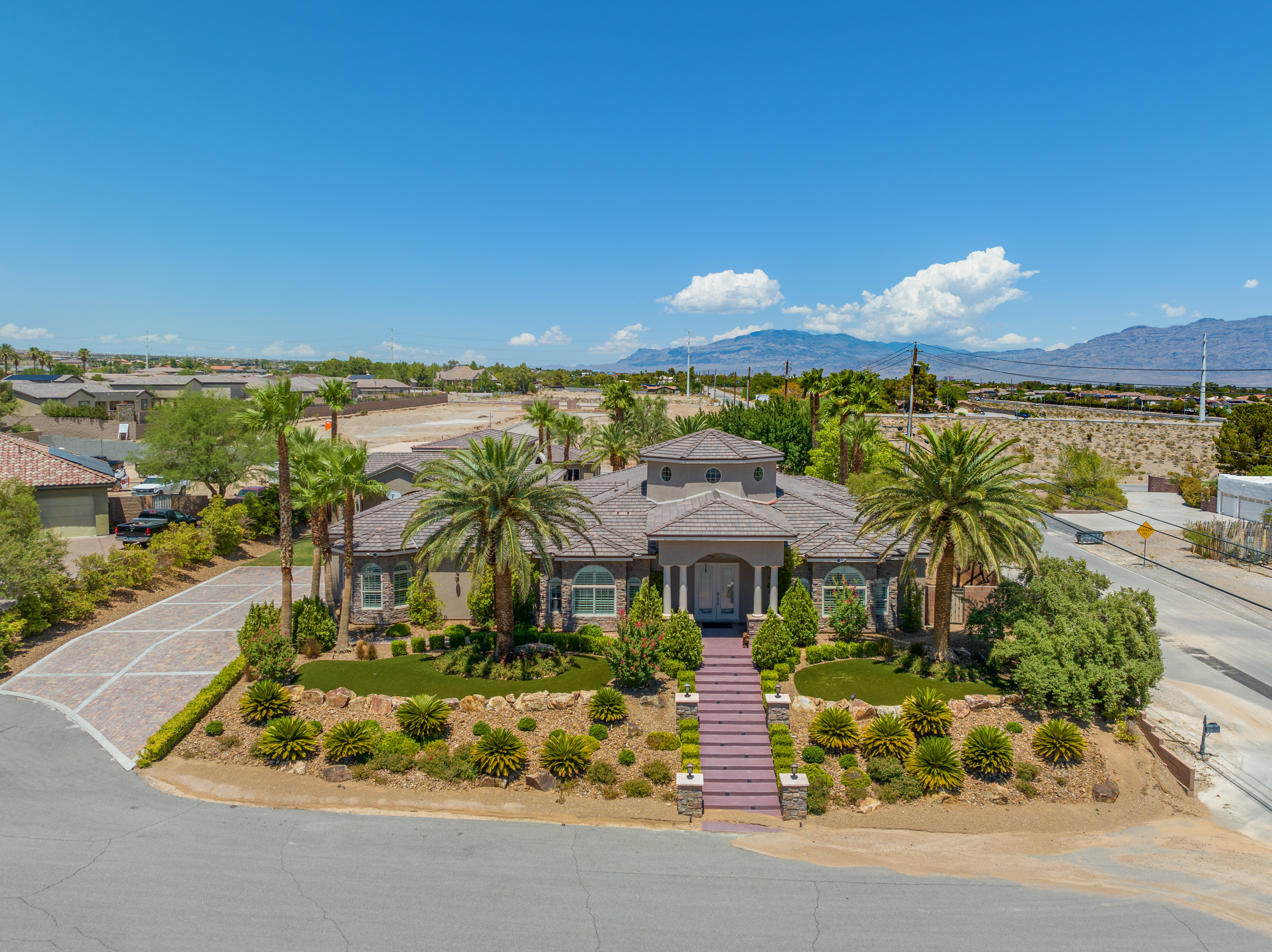
If you have been watching the Las Vegas housing market through the first half of 2026, you have seen something that does not fit the conventional script. Mortgage rates are hovering above 6.4 percent. Inventory has risen. Days on market have stretched. And yet home prices are not falling. The median single-family home price in Las Vegas remains at or near its all-time high, currently holding around $480,000 to $490,000. For buyers who have been waiting for a correction, this is frustrating. For sellers wondering whether they should list before the market turns, it is confusing. And for both sides, understanding why prices are holding firm is the key to making the right move.
The Las Vegas Review-Journal asked this exact question in late July, and the answer reveals a lot about where this market is headed. I have watched Las Vegas real estate cycles for over three decades, through the 2008 crash, the post-recession recovery, the pandemic boom, and the rate-driven adjustment of 2024 and 2025. The current moment looks different from any of those, and the difference matters for anyone buying or selling a home right now.
The Simple Answer: Supply Is Still Too Tight for a Price Drop
In most real estate markets, prices fall when inventory rises above a certain threshold relative to demand. That threshold is generally considered to be around six months of supply. At six months or more, buyers have enough options that sellers must compete on price. Below six months, sellers still hold the advantage.
Las Vegas is currently running well below that threshold in the most active price segments. According to recent market data, overall inventory sits at roughly 0.9 to 1.5 months of supply depending on the price band, which is down substantially from the levels that would trigger broad price declines. The reason is not that there are no homes for sale. There are nearly 5,500 active single-family listings in the valley, which is a healthy number. The reason is that demand continues to absorb supply almost as fast as it hits the market in the sub-$500,000 range.
New listings in the valley are fluctuating around 1,000 per week, and many of those are going under contract within two to four weeks. The homes that sit are overwhelmingly in the higher price brackets, above $750,000 and certainly above $1 million, where buyer pools are thinner and price sensitivity is higher. For the typical buyer looking for a home between $350,000 and $550,000, the market is still tight, and prices reflect that tightness.
The Lock-In Effect Is Keeping Inventory Constrained
One of the most powerful forces holding up prices in Las Vegas is something economists call the rate lock-in effect, and it is not going away anytime soon. Hundreds of thousands of homeowners in Las Vegas refinanced or purchased between 2020 and 2023 when mortgage rates were at 3 percent or lower. Those homeowners now face a choice: sell and buy another home at a 6.5 percent rate, or stay put and keep their low monthly payment.
For a homeowner paying $1,800 per month on a $400,000 mortgage at 3.25 percent, moving to a similar-priced home at 6.5 percent would mean a monthly payment of roughly $2,528. That is an increase of over $700 per month. Most homeowners are not willing to absorb that increase unless they have a compelling reason to move. So they stay. And because they stay, the inventory of affordable, entry-level and move-up homes remains artificially constrained.
This lock-in effect is particularly strong in Las Vegas because the city experienced such a dramatic run-up in home values. Many homeowners who bought before 2020 are sitting on significant equity, over $200,000 in some cases. But that equity is not enough to offset the payment shock of trading a 3 percent mortgage for a 6.5 percent mortgage at current prices. The result is a supply crunch in the price ranges where most families shop.
The Rental Market Is Absorbing Would-Be Buyers
Another factor supporting home prices is the rental market. Apartment construction in the Las Vegas Valley has fallen to its lowest level in four years, with only 3,400 new units expected to be added this year. At the same time, rental demand is rising because many households that qualify for a mortgage are choosing to rent rather than buy at current rates and prices. That rising rental demand pushes rents higher, which changes the rent-versus-buy calculation for the households that can still qualify.
When rents are rising and mortgage rates are high, the calculus becomes more nuanced. A monthly rent of $2,000 for a three-bedroom apartment in a good part of Henderson might be comparable to a mortgage payment of $2,500 to $2,800 for a similar-sized home. The gap is wide enough that some households choose to rent and wait. But the ones who do commit to buying are serious, qualified buyers who have done the math and decided that homeownership is worth the premium in their specific situation.
For sellers, this means the buyer pool is smaller than it was in 2021, but the buyers who are active are serious, well-qualified, and motivated. That is a healthier dynamic than it might appear at first glance.
What This Means for Buyers Right Now
If you are a buyer who has been waiting for prices to drop, here is the honest assessment: a broad price correction in the sub-$500,000 range is unlikely in the near term as long as the lock-in effect persists, inventory stays below four months of supply, and employment in Las Vegas remains strong. The city added tens of thousands of jobs over the past two years, and while the pace of job growth has moderated, the economic foundation is solid enough to support current price levels.
That does not mean you should stretch beyond your comfort zone. It does mean that waiting for a 10 or 15 percent price decline could mean waiting years, and during those years, you will be paying rent instead of building equity. A more realistic approach is to focus on what you can control: your credit score, your down payment savings, your understanding of the neighborhoods that fit your budget, and your willingness to make an offer when you find the right property.
The best strategy for buyers in this market is to look for properties that have been on the market for 30 to 60 days in the higher price brackets and negotiate from a position of patience. For buyers targeting homes under $500,000, the approach should be different: be ready to move quickly, have your pre-approval in order, and work with an agent who can identify overpriced listings that are about to adjust into your range.
What This Means for Sellers Right Now
For sellers, the message is cautiously optimistic. Prices are not falling, and demand in the most active price ranges is strong enough to support current values. But the market has shifted from the frenzy of 2021 and 2022, when any listing at any price would attract multiple offers. Sellers today need to price accurately, present their home well, and be prepared for negotiations that did not exist two years ago.
One trend that is worth watching is the rise in seller concessions. Roughly 31 percent of Las Vegas closings in early 2026 included some form of seller concession, often a rate buydown or closing cost credit. This is not necessarily a sign of weakness. It is a sign of a market where sellers are using creative tools to bridge the affordability gap created by higher rates. A seller who offers a 2-1 rate buydown is effectively reducing the buyer's monthly payment for the first two years without reducing the sale price. That is a smart strategy in a rate-sensitive market.
For sellers in Summerlin, where new construction competition is particularly intense, understanding what the builders are offering is critical. Many builders are offering concessions that resale sellers cannot match on headline price. The answer is not to undercut the builder on price. It is to highlight the advantages of a resale: the established neighborhood, the mature landscaping, the larger lot, the absence of Mello-Roos or special assessment districts. Differentiate, do not discount.
The Wild Card: Interest Rates
The single biggest variable in the Las Vegas housing market for the rest of 2026 is the direction of mortgage rates. If rates drift downward toward 5.5 or 5 percent, the lock-in effect would begin to loosen, more inventory would come to market, and demand would increase as more buyers qualify for financing. That scenario is broadly positive for both buyers and sellers. More inventory means more choices, and lower rates mean more purchasing power.
If rates stay flat or drift upward, the current dynamic would persist. Prices would likely hold in the sub-$500,000 range while continuing to soften in the luxury segment, where buyers have more leverage and are less sensitive to monthly payment changes. In either scenario, a crash is unlikely because the fundamental conditions that produce crashes, a massive oversupply of listings and a sudden drop in demand, are not present.
Las Vegas has an additional buffer that many other markets do not. The city continues to attract new residents from higher-cost states, particularly California. The net migration into Nevada remains positive, and Las Vegas is the primary beneficiary of that inflow. New residents bring buying power, and buying power supports prices.
The Bottom Line: This Is a Market That Requires Strategy, Not Luck
The Las Vegas housing market in mid-2026 is not a market where you can throw a dart at a map and come out ahead. It is a market that rewards preparation, data, and patience. Buyers who understand their budget, their neighborhood preferences, and their negotiating leverage will find good opportunities. Sellers who price accurately, present their homes well, and understand what their buyer pool looks like will get strong results.
The prices are holding because the fundamentals are holding. The question is not whether prices will crash. It is whether you are positioned to make your move in the market as it exists, not as you wish it were. I have helped hundreds of Las Vegas families navigate exactly this kind of market over the past 30 years. If you are ready to have an honest conversation about what the current conditions mean for your specific situation, I would welcome the chance to help.
Over 30 years of Las Vegas real estate experience. Master Certification in Negotiation. Strategic partnerships with Zillow, HomeLight, Veterans United, Google, and Dave Ramsey's referral network.
Full Bio
Ready to make your move in the Las Vegas market?
Whether you are buying or selling, Javier provides the market intelligence and strategic guidance you need. Schedule a consultation.
Schedule a Consultation