How to Negotiate Seller Concessions and Rate Buydowns in the 2026 Las Vegas Market

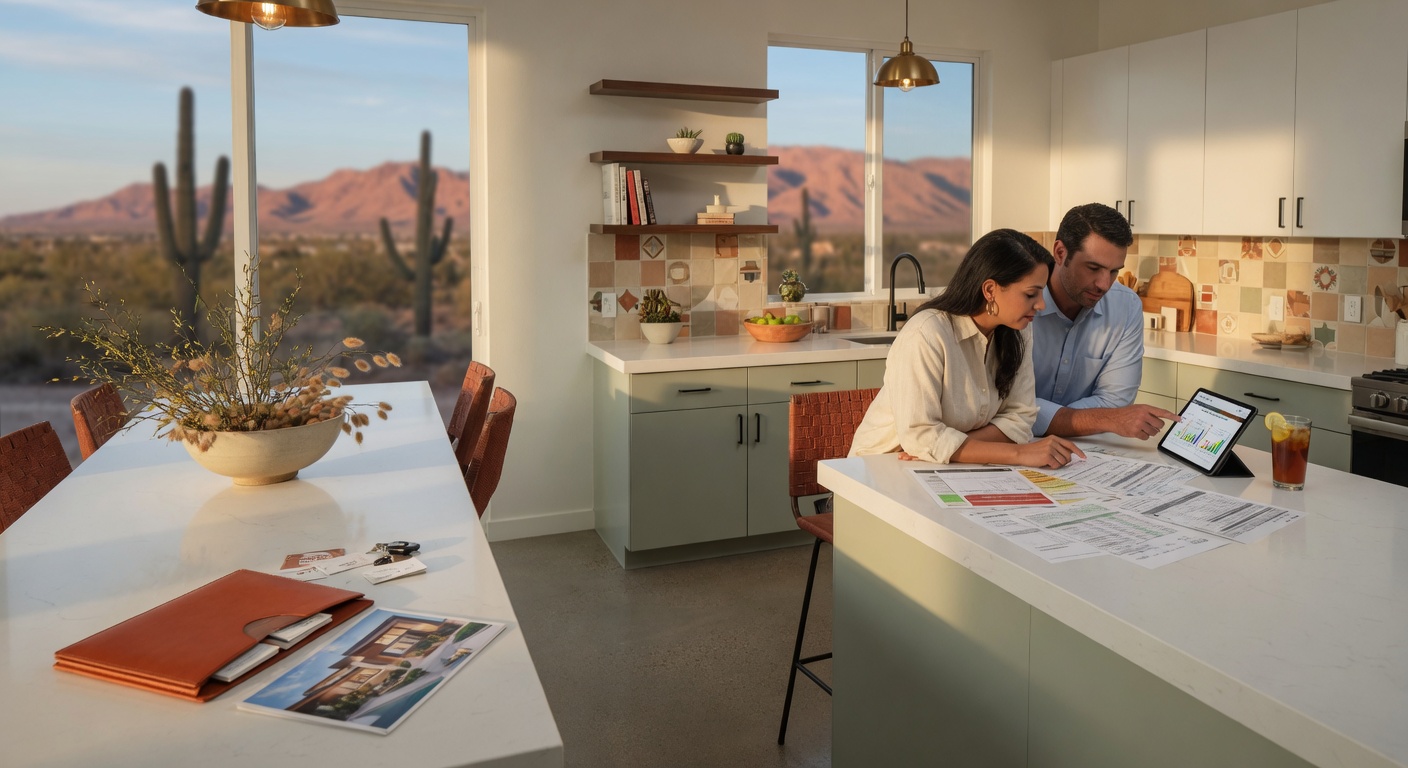
Mortgage rates in Las Vegas are hovering around 6.5 percent. For most buyers, that number dominates every calculation — monthly payment, debt-to-income ratio, the neighborhoods they can afford. But here is what I tell every buyer I work with: the listed rate is not the only rate available to you. In today's market, a well-negotiated seller concession can buy that rate down by one or even two full points for the first two years of ownership, saving you tens of thousands of dollars before the loan resets.
With housing inventory climbing and days on market stretching past 55 on average — and significantly longer in sub-markets like Henderson — sellers in Las Vegas are more willing than at any point in the last five years to offer concessions. The key is knowing what to ask for, how to structure the request, and when a concession delivers more value than a price reduction. These are the strategies I use with every buyer I represent.
What Are Seller Concessions, and Why Are They So Common Right Now?
A seller concession is a financial contribution from the seller toward the buyer's closing costs. In a typical transaction, this can cover loan origination fees, appraisal costs, title insurance, prepaid taxes and insurance, and — most importantly — a temporary interest rate buydown. Concessions are expressed as a percentage of the purchase price, and the maximum allowable amount depends on the loan type: up to 6 percent for FHA loans, 3 percent for conventional, and 4 percent for VA.
In the Las Vegas market right now, seller concessions are not a sign of desperation. They are a negotiating tool that serves both parties. The seller avoids reducing the headline sale price — which protects comparable values in the neighborhood — while the buyer receives tangible financial relief that lowers their monthly payment or reduces their out-of-pocket closing costs. It is a structure that works because it is logical, not emotional.
According to current market data, roughly 31 percent of all Las Vegas closings in early 2026 included a seller-funded concession, and that number climbs to approximately 40 percent for FHA-financed transactions. Sellers and builders in the area are actively using concessions as incentive packages because they know the buyer pool is rate-sensitive and payment-focused.
The 2-1 Buydown: The Most Powerful Concession You Can Request
Of all the concession structures available, the 2-1 temporary rate buydown is the one I recommend first. Here is how it works. Instead of receiving the full note rate on day one, the buyer gets a rate that is 2 percentage points lower in the first year and 1 percentage point lower in the second year. In year three, the rate resets to the original note rate for the remainder of the loan term.
On a $400,000 loan at a 6.5 percent note rate, a 2-1 buydown would set the effective rate at 4.5 percent in year one and 5.5 percent in year two. The difference between the note rate and the reduced rate each month is funded by a lump-sum deposit the seller places into an escrow account at closing. The buyer never pays this amount — it comes entirely from the seller's concession.
The cost varies by loan size, but on a $350,000 mortgage, a 2-1 buydown typically requires approximately $7,560 from the seller. On a $400,000 loan, you are looking at roughly $8,640. These are real numbers, but they translate into monthly savings of $500 or more during the first year, which is the period when most buyers feel the most payment pressure.
Why does this matter more than a straight price reduction? A $10,000 price reduction on a $480,000 home saves you roughly $60 to $65 per month on your mortgage payment. A $10,000 seller concession applied to a 2-1 buydown saves you $500 or more per month for the first 12 months. The math is not close. When rates are high, a buydown delivers dramatically more value per dollar than a price cut.
How to Structure Your Concession Request
Not every seller will agree to a concession, and not every concession request is structured the same way. The approach matters as much as the ask. These are the frameworks I use depending on the situation.
The long-listing strategy. For a home that has been on the market for 45 days or more, the seller has already absorbed weeks of carrying costs — mortgage payment, HOA fees, insurance, utilities, and lawn care. Their motivation to close has increased. A concession request that includes a 2-1 buydown and closing cost credits of 2 to 3 percent of the purchase price is realistic and usually well-received. The seller is not giving you a discount on the sale price; they are investing in a faster, more certain close.
The competitive-listing strategy. For a home that just hit the market and has early interest, you may not get a concession on the price itself, but you can negotiate concessions into the inspection response. If the inspection reveals even minor items — aging water heater, worn weather stripping, a slow drain — those findings become the basis for a seller credit rather than a repair request. This is an underused strategy that works because it gives the seller a clean transaction without contractor coordination.
The builder-incentive strategy. New construction builders in Henderson, Summerlin, and the master-planned communities around Centennial Hills are offering aggressive concession packages right now, including design center credits, closing cost assistance, and rate buydowns through preferred lenders. These builder concessions can stack, meaning a buyer might receive a 2-1 buydown funded by the builder plus additional credits toward upgrades. I always advise buyers to compare the builder's offer against what they could negotiate on a resale with a concession — the resale often wins on total value, even when the builder headline looks attractive.
Seller Concessions vs. Price Reduction: When Each Wins
This is the question I hear most often, and the answer depends on your financial position and the seller's priorities.
Choose a concession when: you are rate-sensitive and your monthly payment matters more than your purchase price. Choose a concession when you want to minimize out-of-pocket closing costs. Choose a concession when the seller's asking price is already at or near comparable value and they are unlikely to move further on price.
Choose a price reduction when: you have cash reserves and are more concerned about long-term equity and loan-to-value ratios. A lower purchase price means a lower assessed value, lower property taxes, and a smaller loan balance. If you are planning to hold the home for 10 or more years, the compounding effect of a lower purchase price may outweigh the short-term savings of a buydown.
The hybrid approach. In my experience, the strongest negotiating position is to request both a modest price reduction and a concession. For example, on a home listed at $485,000, you might offer $475,000 with a 3 percent seller concession ($14,250). The seller nets $460,750, which is below their asking price but still within the range of recent comps, and you walk away with a 2-1 buydown funded and closing costs covered. This structure gives the seller a win they can explain to their agent and a buyer a financial package that reduces first-year payments significantly.
What Sellers Need to Know
If you are selling a home in the current Las Vegas market, concessions are not a loss — they are a strategic investment in your timeline. Every week your home sits on the market costs you real money. At the median home price of $490,000, carrying costs for a home with a mortgage, HOA, insurance, and utilities can easily run $2,800 to $3,500 per month. A $15,000 concession that gets your home closed three weeks sooner saves you $7,000 to $8,000 in carrying costs alone, and that is before you account for the price reductions most sellers make after 60 days of listing.
From a pricing perspective, a concession does not show up on your sold price in the MLS the same way a straight price reduction does. Your recorded sale price stays at or near your asking price, which protects comparable values for your neighborhood. This matters when you are in a community where recent sales directly influence how appraisers value neighboring homes.
The sellers who move first with a well-structured concession package are the ones who capture the most buyer attention, especially in the first two weeks after listing. That is when traffic peaks, and that is when a concession-driven listing stands out in a sea of standard offers.
How to Get Started
The negotiation starts before you make an offer. It starts with a thorough analysis of the property's days on market, the seller's likely motivation, current comparable sales, and the available concession structures that match your loan type. Every transaction is different, and the concession strategy that works for a home in Summerlin may not be the right play for a property in Henderson or Centennial Hills.
I build a concession strategy into every buyer representation agreement I sign. It is not an afterthought or a last-minute request — it is a core part of how I structure offers to protect my buyers' financial position from day one. Thirty years of negotiating in this market has taught me exactly which sellers will respond to a concession request, how to present it, and how to secure the maximum allowable amount under your loan program.
If you are buying or selling a home in Las Vegas this year, the concession landscape is one of the most important — and most misunderstood — elements of the transaction. Understanding it can save you thousands. Ignoring it can cost you the same.
Over 30 years of Las Vegas real estate experience. Master Certification in Negotiation. Strategic partnerships with Zillow, HomeLight, Veterans United, Google, and Dave Ramsey's referral network.
Full Bio
Ready to make your move with confidence?
Javier builds concession strategy into every buyer and seller representation. Protect your equity and your timeline.
Get Expert Guidance