Las Vegas Economic Rebound: What Mid-2026 Data Means for Housing

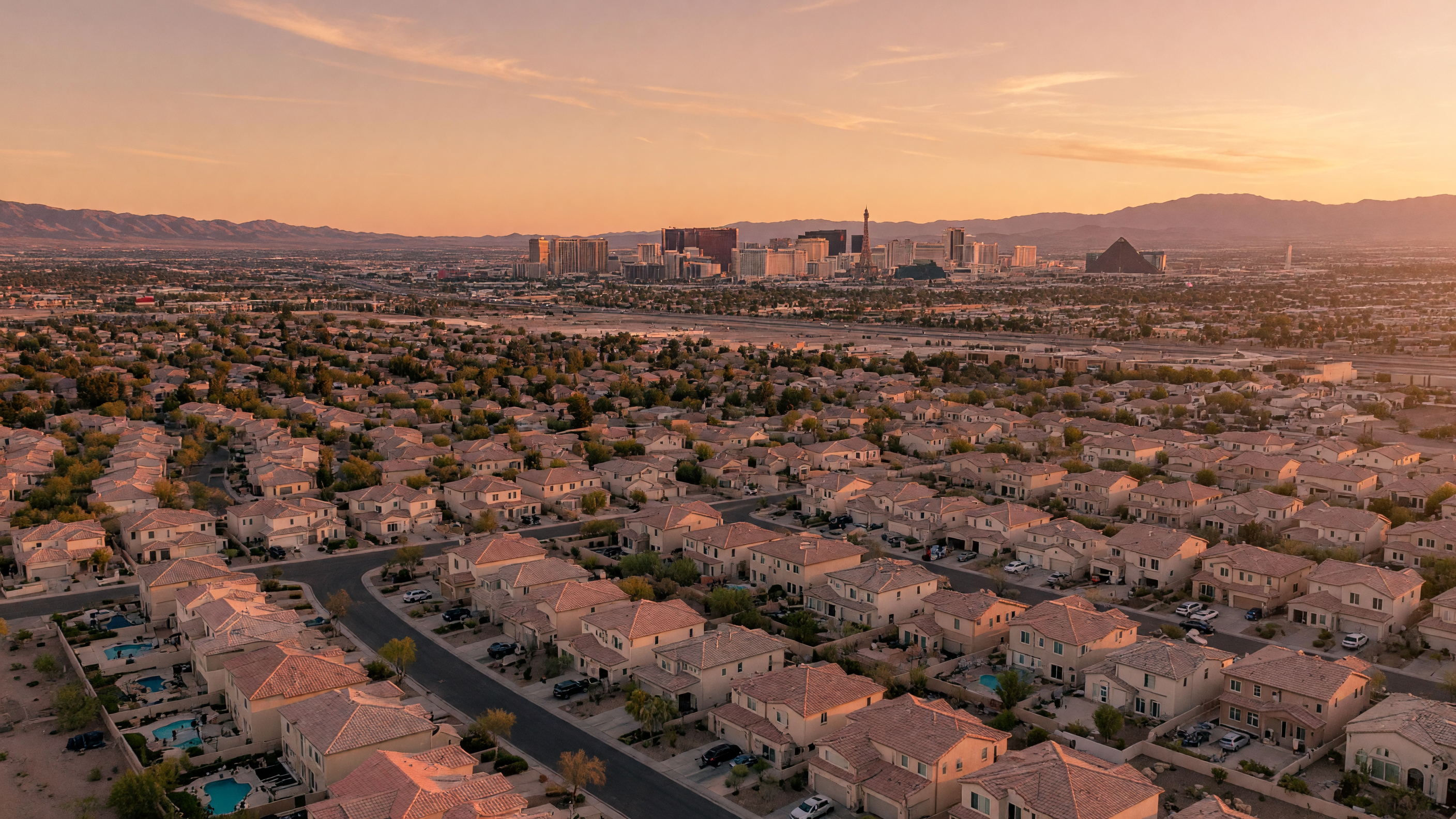
Las Vegas spent much of 2025 absorbing a correction. Job growth slowed, visitor volume dipped, and consumer spending pulled back across several sectors. For anyone tracking the housing market, it felt like the music had stopped. But as we move through mid-2026, the data tells a different story: Las Vegas is rebounding, and the housing market is positioned to benefit.
The question for buyers, sellers, and investors is not whether the recovery is real. The numbers say it is. The question is what the rebound looks like in practice and how to position yourself ahead of it.
2025 Was a Reset, Not a Collapse
Let us be honest about what happened last year. Nevada's economy came under real pressure in mid-2025, with job growth slowing notably in the construction and government sectors. Visitor volume and consumer spending hit the brakes, and the region's unemployment picture darkened for a stretch. The Las Vegas Review-Journal covered the slowdown in detail, and the headlines were not kind.
But here is what the headlines missed: the fundamentals that drive long-term housing demand never broke. Population continued to grow at approximately 1.84 percent annually, driven by in-migration from California and other high-cost states. The median home price softened modestly rather than cratering. And builders, rather than halting construction, began adapting to the new reality by shrinking home footprints and offering aggressive buyer incentives.
That is not a market in trouble. That is a market recalibrating.
The Rate Outlook Is Turning Favorable
As of June 2026, the 30-year fixed mortgage rate in Nevada sits at approximately 5.875 percent, down meaningfully from the 6.5 to 7 percent range that defined much of 2025. The Federal Reserve has held the federal funds rate at 3.50 to 3.75 percent after a series of cuts in late 2025, and market consensus points to another 25 to 50 basis points of easing before year-end.
Why does that matter for Las Vegas housing? Because every quarter-point reduction in mortgage rates translates directly into monthly payment relief. At the current median price of roughly $498,000 for a single-family home, a half-point rate reduction over the next six months could save a buyer $150 to $200 per month. Over 30 years, that adds up to tens of thousands of dollars.
For buyers who have been waiting on the sidelines, the rate trajectory is finally working in their favor. The window between where rates are now and where they are heading represents a genuine opportunity, particularly in submarkets like Henderson and Summerlin where inventory is elevated and sellers are motivated.
Builders Are Leading the Affordability Charge
One of the more interesting dynamics in the Las Vegas market right now is how homebuilders are responding to affordability pressures. Rather than cutting prices outright, many builders are shrinking home sizes and redesigning floor plans to hit lower price points. Smaller lots, efficient layouts, and scaled-back finishes are allowing builders to deliver new construction that competes with resale inventory on price.
This matters for two reasons. First, it means new construction is not pulling buyers out of the resale market the way it did during the boom. Instead, builders and resale sellers are competing in overlapping price bands, which gives buyers more options at every price point. Second, it signals that builders have confidence in continued demand. They would not be investing in new communities if they expected a prolonged downturn.
The incentive environment is also strong. Many builders are offering rate buydowns, closing cost credits, and upgrade packages that effectively reduce the true cost of ownership. For buyers in Centennial Hills, Summerlin, and the southern Henderson corridors where new construction is most active, these incentives can be worth $15,000 to $30,000 or more.
Population Growth Keeps the Floor Under Demand
Despite the 2025 slowdown, Las Vegas metro population grew by approximately 1.84 percent year-over-year, driven by continued migration from higher-cost states. California remains the primary source of inbound residents, but Texas, the Pacific Northwest, and the Mountain West are also contributing.
This sustained population growth is the single most important factor supporting long-term housing demand in Las Vegas. Every new resident who relocates to the valley eventually needs housing, whether as a buyer or a renter. The migration trend has been consistent for over a decade, and there is no indication it is slowing.
For homeowners in established neighborhoods across Las Vegas, Henderson, and Summerlin, this means the demand floor remains solid. Short-term price fluctuations get the headlines, but population growth is the structural force that keeps property values anchored over time.
What the Big Developments Signal
Las Vegas continues to attract transformative investments that reinforce its long-term trajectory. The MLB stadium on the Strip, which began construction in mid-2025, is progressing on schedule. The Las Vegas Convention Center expansion is projected to boost tourism and convention traffic significantly in the coming years. And a major $2 billion acquisition by a Summerlin-based developer made waves in the business community, signaling deep confidence in the valley's commercial and residential future.
These projects matter for housing because they create jobs, generate tax revenue, and reinforce the perception of Las Vegas as a growing, dynamic metropolitan area rather than a one-industry tourism town. Each major development brings ancillary economic activity that supports housing demand in surrounding neighborhoods.
Healthcare and biotech sectors are also contributing to employment growth, diversifying the economic base in ways that make the valley more resilient to tourism cycles. That diversification has been a priority for economic development leaders, and the results are starting to show.
What This Means for Buyers Right Now
If you are a buyer in the Las Vegas market today, you are operating in conditions that have not existed in several years. Rates are trending down. Inventory is elevated. Builders are offering concessions. And sellers who have been on the market for 40-plus days are increasingly willing to negotiate.
The mistake buyers make in environments like this is waiting for perfect conditions. Rates might drop another quarter point, but that same delay could mean competing with more buyers as the market heats up. The best strategy is to lock in a home at today's prices and today's rates, then refinance if rates continue to decline. That is a position of strength.
In Henderson and Summerlin specifically, the combination of new construction incentives and resale price adjustments creates a rare window where buyers can access quality homes at price points that were not available twelve months ago.
What This Means for Sellers Right Now
Sellers need to understand that the rebound benefits them too, but only if they price correctly from day one. The improving economic outlook will bring more buyers into the market over the coming months. But those buyers are also seeing more inventory and more options. Your listing is competing not just on price, but on presentation, condition, and perceived value.
The sellers who will benefit most from the economic rebound are those who list with a clear strategy: accurate pricing, professional preparation, and marketing that reaches the broadest possible audience. That is exactly what my 32,000-plus buyer database and partnerships with Zillow, HomeLight, Veterans United, and Google are designed to deliver.
The Bottom Line
Las Vegas is in the early stages of an economic rebound that directly supports housing market recovery. Rates are easing, population is growing, builders are adapting, and major developments are reinforcing the valley's long-term trajectory. The headwinds of 2025 were real, but they were temporary.
For anyone making a real estate decision in Las Vegas, Henderson, Summerlin, or Centennial Hills this year, the data points to one conclusion: the market is shifting in your favor, and the time to act is now. Waiting for certainty is a strategy that costs money. Acting on strong data with experienced guidance is how you get ahead.
I have been navigating these cycles in Las Vegas for over 30 years, and the pattern is consistent: the best outcomes come to those who position themselves before the crowd catches on. If you want to discuss what the current data means for your specific situation, I am available for a no-obligation consultation.
For Agent Image / WordPress (tmtluxury.com)
Las Vegas 2026 Rebound: Rate Cuts, Population Growth, and Housing Opportunity
Las Vegas is bouncing back in 2026. Falling rates, rising population, and builder incentives are creating new opportunities for buyers and sellers across the valley.
/las-vegas-2026-rebound-housing-opportunity
Different phrasing and slug avoid duplicate SEO penalties when cross-posted to tmtluxury.com.
For Lofty CRM
Las Vegas Market Rebound: Why 2026 Is Your Year to Move
Rates are dropping and Las Vegas is booming again. See what mid-2026 data means for your next move.
/vegas-2026-market-rebound
Shorter, punchier title and description optimized for Lofty blog posts that double as email drip content.
Over 30 years of Las Vegas real estate experience. Master Certification in Negotiation. Strategic partnerships with Zillow, HomeLight, Veterans United, Google, and Dave Ramsey's referral network.
Full Bio
Position yourself ahead of the rebound
Javier provides data-driven strategy for buyers and sellers in every market condition. Schedule a consultation today.
Talk to Javier