The Overpricing Trap: What Las Vegas Sellers Lose When They Price Too High

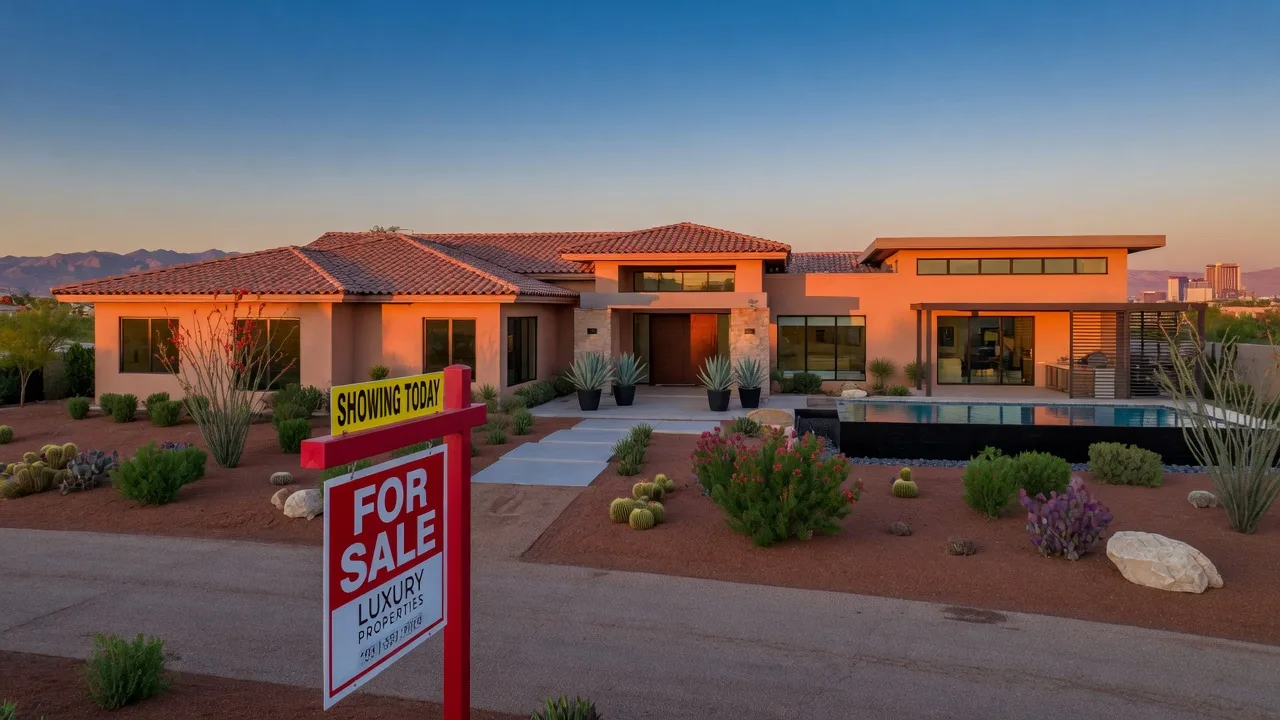
Overpricing is the single most expensive mistake a Las Vegas seller can make in this market, and I see it happen every week. A seller looks at what their neighbor listed their home for three months ago. They add five percent because their upgrades are better. They list at a round number that feels right emotionally. Then the home sits. The showing requests taper off after the first week. The feedback starts coming in with the same refrain: overpriced.
In the mid-2026 Las Vegas market, where the valley-wide median sits around $485,000 to $498,000 with roughly 2.9 months of inventory and days on market averaging about 55, the margin for pricing error is smaller than it has been in years. Sellers who get the price wrong do not just leave a little money on the table. They trigger a cascade of costs that most sellers never see coming until the net sheet comes out at closing.
Let me walk through what overpricing actually costs, how the math works in today's numbers, and the five hidden costs that make it the most dangerous mistake in Las Vegas real estate right now.
The Data: What Happens When You Overprice
The industry data is remarkably consistent across every price tier in Las Vegas. Homes priced correctly within the first 90-day comparable market analysis sell in roughly 42 days on average. Homes priced five percent or more above those comps sit for an average of 86 days. That is more than twice as long. And those overpriced homes do not eventually sell at their asking price. They require an average price reduction of 4.1 percent before they go under contract.
Here is what that math looks like on a Las Vegas home valued at $500,000. The seller lists at $525,000, five percent above a well-researched market price. The home sits for 86 days. The seller drops the price to $499,000, which is actually two percent below the accurate market price because the market has shifted during the three months the home sat. The final sale price after negotiations lands at $490,000. The seller netted $35,000 less than if they had priced correctly from day one, plus they paid an extra 44 days of carrying costs.
That pattern is not hypothetical. It is playing out across Las Vegas, Henderson, Summerlin, and Centennial Hills right now.
The Five Hidden Costs of Overpricing
Most sellers see only the price reduction. They do not see the expenses that accumulate while the home sits waiting for the market to prove them wrong. Here are the five that add up fastest.
1. Carrying Costs That Compound Weekly
Every extra day your home sits on the market costs real money. For the average Las Vegas seller with a mortgage, the monthly payment including principal, interest, property taxes, and insurance runs roughly $3,200 to $4,000 depending on the loan terms. HOA dues add another $150 to $400 per month in most master-planned communities. Utilities, landscaping maintenance, and pool service add $300 to $600 per month.
On a $500,000 home, the total monthly carrying cost lands around $3,800 to $4,600. Every 30 days the home sits beyond the expected 42 days costs roughly $4,000 out of pocket. Over 44 extra days, that is roughly $5,800 in pure carrying cost that a correctly priced home would not have incurred.
If you have already moved out and are paying rent or a second mortgage in your new city, double that number. You are now carrying two housing payments.
2. The Price Reduction Penalty
The 4.1 percent average price reduction is the most visible cost, but the way it compounds is rarely discussed. A home that starts at $525,000 and drops to $499,000 did not just lose $26,000 in asking price. It lost the buyers who already saw the home at the higher price and decided it was not worth revisiting. It lost the agent momentum that comes from a fresh listing. It lost the psychological advantage of a clean price that draws multiple offers.
Once a price reduction goes live, the listing carries a stigma. Buyers and their agents see the history. They know the home has been sitting. They wonder what is wrong with it. Some agents will stop showing the home altogether, waiting for another reduction before they bring their clients. The $26,000 reduction is only the beginning of what you lose. The negotiation leverage disappears, and the eventual sale price almost always lands below the reduced asking price as well.
3. The Buyer Pool Shrinks Before It Ever Grows
This is the cost that hurts the most because it is invisible. When a home launches at the wrong price, it does not attract fewer buyers. It attracts the wrong buyers. The buyers who see a $525,000 home in a $500,000 neighborhood are shopping in a different price bracket. They expect a home that is noticeably better than the $500,000 comps. When they tour the property and see a home that is essentially the same quality as the comps, they leave disappointed. They do not make an offer. They do not tell their agent to watch for price drops. They move on.
Meanwhile, the buyers who would be interested at $500,000 never see the listing because their search filter cuts off at $500,000 or $510,000. They never tour the home. They never know it exists. By the time the price drops to $499,000, those buyers have already found other homes and gone into contract.
The mismatch is the most destructive part of overpricing. You lose both pools: the buyers at the higher price because your home does not deliver what they expect, and the buyers at the correct price because your home never appeared in their search.
4. The Days-on-Market Stigma Hurts Final Price
In Las Vegas, days on market are public. Every buyer, every agent, and every appraiser can see exactly how long a listing has been active. A home that has been on the market for 90 days is assumed to have something wrong with it, even when the only problem was the starting price.
That assumption directly affects the final sale price. Buyers who tour a 90-day listing know they have leverage. They offer below asking, often well below. They ask for repair credits and closing cost concessions that a fresh listing would not offer. The seller, exhausted by the carrying costs and eager to move on, accepts terms that would have been unthinkable at day one.
The appraiser also sees the days on market. A 90-day listing with two price reductions will appraise at or below the reduced price, locking in the loss. There is no appraiser miracle that saves you from a pricing mistake.
5. The Opportunity Cost of a Delayed Move
This is the cost sellers think about least and regret most. Every week your home sits unsold, your next home does not close. If you are buying a new construction home in Summerlin or Henderson, the builder's clock does not stop while your home languishes. If you are buying a resale, the seller of that home expects you to close on time, and if you cannot because your sale has not closed, you risk losing your earnest money deposit or the home itself.
I have seen sellers lose their dream home because they overpriced their current home by three percent. The carrying costs were one thing. Losing the home they had already fallen in love with in escrow was a different level of pain.
In a rising market, sellers could take the risk of overpricing because appreciation would bail them out within weeks. In a balanced market at 2.9 months of inventory, appreciation will not save you. The market will correct your price for you, and it will charge you for the lesson.
Why Sellers Overprice: The Three Most Common Rationales
I hear the same three justifications repeatedly, and they all lead to the same outcome.
"I need to get at least this much to buy my next home." What you need has no relationship to what the market will pay. Buyers do not care about your next purchase. They care about whether this home is a fair value compared to the other homes in this neighborhood. Pricing based on your financial needs rather than market data is the fastest way to leave money on the table.
"Zillow says my home is worth this." Automated valuation models are useful tools for broad market awareness, but they are not appraisals. Zillow's Zestimate frequently misses neighborhood-specific nuances, recent condition changes, and the difference between a home with a pool and a home without one in a community where pools add measurable value. The only number that matters is what similar homes have actually sold for in the last 90 days within a half-mile radius of your property.
"My neighbor's house sold for this three months ago." Market conditions change faster than most sellers realize. Three months ago, inventory might have been lower, interest rates might have been better, and the buyer pool might have been deeper. In a market where mortgage rates sit around 6.55 percent with two potential Fed cuts on the horizon, a 90-day-old comp can be misleading. The comp that matters is the one that closed last week, not the one that closed last quarter.
Pricing Precision by Neighborhood
One of the most common pricing mistakes I see is treating the entire Las Vegas valley as a single market. A pricing strategy that works for a standard three-bedroom home in Spring Valley will not work for a luxury property in Summerlin or a horse property on the edge of Centennial Hills. Each pocket has its own buyer pool, its own days-on-market average, and its own price sensitivity.
In Summerlin, buyers expect newer construction, resort-style amenities, and HOA-managed landscaping. Pricing aggression is punished quickly because buyers in that submarket have dozens of comparable homes to tour. In Henderson, the market breaks down by master-planned community, with Green Valley buyers behaving differently than Lake Las Vegas buyers or Anthem buyers. In Centennial Hills, the buyer pool includes more families looking for space and school proximity, making price elasticity tighter.
A pricing strategy that works in one pocket can leave a home unsold for 90 days in a pocket 15 minutes away. I build every pricing recommendation from a neighborhood-specific comparable market analysis, not a valley-wide average.
The Right Way to Price in This Market
The sellers who win in this market follow a simple discipline. They price based on closed comps from the last 90 days in the immediate neighborhood, adjusted for condition, upgrades, lot size, and views. They price at or within one percent of that analysis, not above it. They launch with professional photography, staging, and a coordinated marketing plan on day one.
The result is not a lower price. The result is a shorter time on market, more showing requests in the first two weeks, and a competitive dynamic that often drives the final sale price above the list price. The correctly priced home in a balanced market generates urgency. The overpriced home generates silence.
I have been pricing Las Vegas homes for over 30 years, and the math has not changed. Price it right from day one, or pay the market to teach you why you should have. The difference between those two paths is typically $25,000 to $40,000 in net proceeds plus months of carrying costs.
If you are thinking about selling your Las Vegas, Henderson, Summerlin, or Centennial Hills home, I will give you the unvarnished pricing analysis before you decide what to list at. No fluff, no pressure. Just the data and a strategy built around what this market will actually pay.
Over 30 years of Las Vegas real estate experience. Master Certification in Negotiation. Strategic partnerships with Zillow, HomeLight, Veterans United, Google, and Dave Ramsey's referral network.
Full Bio

Thinking about selling? Get the real number.
Javier provides a no-pressure, data-driven comparable market analysis for every Las Vegas, Henderson, Summerlin, and Centennial Hills home.
Request Your Free CMA