Las Vegas Rent Prices Drop 8.2% as Housing Market Hits a New Equilibrium

There is an old saying in real estate: when the rental market shifts, the for-sale market is never far behind. If that holds true, the latest data out of Las Vegas should have every buyer, seller, and investor paying close attention.
According to a report published by the Las Vegas Review-Journal on August 13, 2026, single-family rents in Southern Nevada dropped 8.2 percent year over year through the second quarter. Multifamily rents fell 4.6 percent over the same period. Zumper's latest report confirmed the trend, showing rents declining across every tracked area of the valley. And on August 17, the Review-Journal reported that Las Vegas leads the entire nation in rental concessions, with landlords offering free months, reduced deposits, and waived fees to attract tenants.
For anyone who has tracked the Las Vegas housing market over the past three decades, this is a significant development. Let me walk through what is happening, why it matters, and how it connects to the larger story of where the market is headed in the second half of 2026.
The Rental Market: A Supply Story
The headline number is striking: single-family rents down 8.2 percent. But the story behind the number is even more instructive.
The Las Vegas valley has been in a multi-year apartment construction boom. Developers broke ground on thousands of new units during the post-pandemic population surge, and those units are now coming online. According to the Review-Journal's August 13 report, the influx of new supply has shifted the rental market from landlord-friendly to tenant-friendly in roughly 18 months. The vacancy rate has climbed. Landlords who were receiving multiple applications on day one are now competing for qualified tenants. Concessions that were unheard of two years ago are now standard practice.
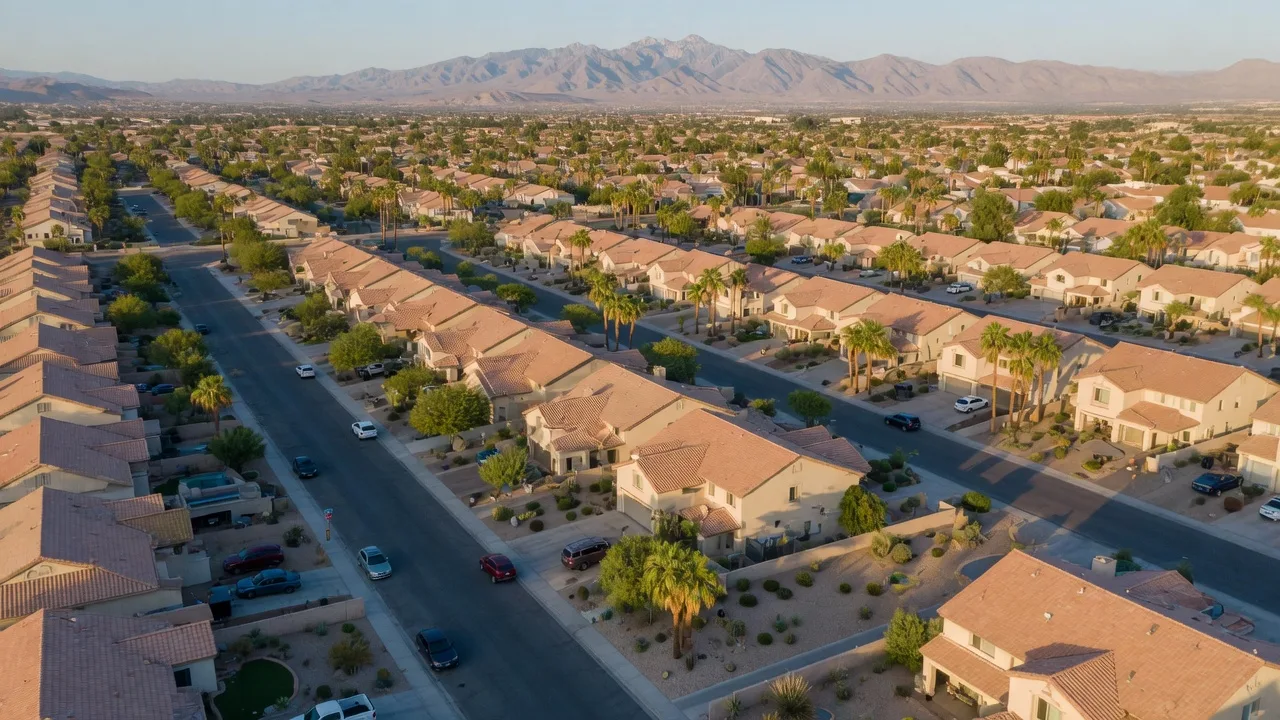
Las Vegas leads the nation in rental concessions. Single-family rents dropped 8.2% year over year as a wave of new apartment construction reshapes the rental landscape.
This is what a healthy supply correction looks like. The rental market overheated during the pandemic, rents shot up to unsustainable levels, and the market responded by building more units. Now supply has caught up, and rents are adjusting back toward levels that reflect local wages and economic reality. It is painful for landlords who bought at the peak of the market. But for tenants and for the long-term health of the housing ecosystem, it is a necessary correction.
For prospective homebuyers, this creates a fascinating strategic choice. If rents are falling and concessions are available, the monthly cost of renting is becoming more competitive with the monthly cost of owning, especially at current mortgage rates. That calculus matters, and I will come back to it.
The For-Sale Market: Holding Steady
While the rental market is in a clear downward adjustment, the for-sale market is telling a more nuanced story.
The July data, which I covered in detail last week, showed the median single-family home price at $480,000, down 2 percent from the $490,000 record set in May and June. Inventory sat at approximately 7,442 single-family homes without offers at the end of July, up 4.1 percent year over year. The months of supply has settled into the 2.6 to 2.9 month range, which is classified as a balanced market.
But here is the critical detail that the aggregate numbers can obscure: total active listings valley-wide are approaching roughly 8,100. That number has roughly tripled from the historic low of about 2,650 listings in early 2022. But it is still below the pre-pandemic normal range of 8,800 to 12,200 active listings. In other words, inventory has recovered significantly, but it has not yet returned to what we used to consider normal.
Sales volume, meanwhile, is holding up. The Review-Journal reported that 2,046 previously owned single-family homes closed in July, up 1.2 percent year over year. In a market where mortgage rates are hovering between 6.55 and 6.69 percent, the fact that closed sales are flat to slightly positive is a sign of underlying demand strength.
The for-sale market has found an uneasy but functional equilibrium. Inventory has tripled from pandemic lows but remains below pre-pandemic norms. Sales are flat to positive. Prices are holding near records.
The Mortgage Rate Story: Sideways but Stable
As of mid-August 2026, 30-year fixed mortgage rates are hovering in the 6.55 to 6.69 percent range depending on the lender and borrower profile. Bankrate quoted a Nevada average of approximately 6.13 percent on August 18, while MortgageNewsDaily showed rates closer to 6.75 percent the same day. The variance reflects differences in how each platform samples lenders, loan types, and points.
What matters more than any single rate quote is the trend. Rates have been moving sideways in a relatively narrow band for months. The spikes and plunges that characterized 2023 and 2024 have given way to a stable plateau. Fannie Mae, the Mortgage Bankers Association, and Wells Fargo all project 30-year rates to remain in the 6.1 to 6.5 percent range through late 2026 and into 2027. Two Federal Reserve rate cuts are projected for the remainder of this year, which could push rates modestly lower, but nobody is forecasting a return to the 3 to 4 percent environment of 2020 and 2021.
For buyers, this means the rate environment is unlikely to be dramatically different six months from now than it is today. Waiting for lower rates carries a real risk: home prices could move higher in the meantime, offsetting any savings from a slightly lower monthly payment.
Connecting the Dots: What the Rental Market Tells Us
The most interesting question right now is how the rental market correction will eventually affect the for-sale market. There are three scenarios worth considering.
Scenario One: Renters become buyers. If rents are falling but home prices are holding, the relative cost advantage of renting over owning widens. That could keep some potential first-time buyers in the rental market longer, reducing demand for entry-level homes and putting downward pressure on that segment of the for-sale market. I am already seeing this play out in conversations with clients. Young professionals who were rushing to buy in 2024 because rents were skyrocketing are now more willing to sign another lease and wait for rates to come down.
Scenario Two: Investor demand softens. Many of the single-family homes purchased by institutional and mom-and-pop investors during the pandemic were bought with the expectation of rising rents. If rents are falling and concessions are rising, the investment thesis weakens. That could reduce investor demand for entry-level homes, which would also ease price pressure in that segment. We are already seeing this in the data: the share of homes purchased by investors has declined from its 2022 peak.
Scenario Three: The rental correction absorbs potential distressed inventory. Here is the more optimistic scenario. If falling rents make housing more affordable for tenants, fewer renters fall behind. Fewer evictions. Fewer financial disruptions that cascade into credit damage and inability to qualify for a future mortgage. In the long run, a healthier rental market creates a healthier pool of future homebuyers.
What This Means for Buyers
If you are a buyer in the Las Vegas market right now, you have options that did not exist two years ago. You can rent at a more reasonable monthly cost and wait. Or you can buy in a market where inventory is up, competition is down, and motivated sellers are more willing to negotiate on price, contingencies, and closing costs.
The decision comes down to your timeline. If you plan to be in Las Vegas for five years or more, buying still makes sense in most scenarios. Prices are holding near records, but they are not falling off a cliff. Interest rates are elevated but stable. And the long-term demographic drivers of the Las Vegas market — job growth, population growth, migration from higher-cost states — remain firmly in place.
If your timeline is shorter, or if you are still building your down payment and credit profile, the rental market correction gives you breathing room. Falling rents mean you can save more each month toward a future purchase. That is not a reason to delay indefinitely, but it is a reason to be strategic rather than desperate.
In Summerlin and Henderson, where inventory is tighter and demand remains strong, the window of opportunity is narrower. In Centennial Hills and the northwest valley, where more new construction is available, buyers have more leverage. In the luxury segment above $1 million, where inventory has been elevated all year, serious buyers can negotiate meaningful concessions from motivated sellers.
What This Means for Sellers
For sellers, the rental market correction is another signal that you cannot take the market for granted. When renting becomes more attractive relative to buying, the pool of buyers shrinks. Every home listed for sale is competing not just with other listings but with the option to rent at a more favorable monthly cost.
That does not mean you cannot sell. It means you have to earn the sale through pricing strategy, presentation, and marketing reach. In a balanced market with 2.6 to 2.9 months of supply, the homes that sell quickly are the ones that are priced correctly from day one, professionally staged, and aggressively marketed to the widest possible audience.
My partnerships with Zillow, HomeLight, Veterans United, Google, and Dave Ramsey's referral network give every listing I take national exposure to a buyer audience of over 42 million. That reach matters more in a balanced market than it does in a frenzy. When buyers are selective, you want your home in front of as many qualified buyers as possible, not sitting on the MLS waiting for someone to stumble across it.
The Bottom Line: A Correction, Not a Crisis
Over three decades in this business, I have learned to read the signals that separate normal market cycles from genuine trouble. The mid-2026 Las Vegas market has all the characteristics of a normal cycle.
The rental correction is supply-driven and healthy. The for-sale correction is mild and contained. Mortgage rates are elevated but stable. Job growth continues to lead the nation. Population growth continues. And the structural conditions that caused the 2008 crash — widespread mortgage fraud, negative equity chains, a cascade of foreclosures — simply do not exist in today's market.
The equilibrium we have reached is not a bad place to be. It is a place where buyers have choices, sellers have to compete, and the market functions the way a healthy market should. For the people who take the time to understand where we are and what the data means, this is a market full of opportunity.
Whether you are buying, selling, or investing in Las Vegas, Henderson, Summerlin, or Centennial Hills, I would welcome the chance to help you navigate it. Thirty years of experience and a Master Certification in Negotiation do not make me clairvoyant. But they do mean I have seen this movie before, and I know how to read what is coming next.
For Agent Image / WordPress (tmtluxury.com)
Las Vegas Rent Prices Fall 8.2% While Home Sales Hold Steady in Balanced Market
Las Vegas leads the nation in rental concessions as single-family rents drop 8.2%. Home prices hold near records at $480K. Here is what the August market data means.
/las-vegas-rental-market-correction-2026
Different keyword focus and unique slug avoid duplicate SEO penalties when cross-posted to tmtluxury.com.
For Lofty CRM
Vegas Rents Are Dropping Fast: What Buyers and Sellers Need to Know
Rents down 8.2%, prices holding at $480K. Vegas market shifts to balanced. Find out what it means for you.
/vegas-rental-market-update-2026
Shorter, punchy format optimized for Lofty blog posts that double as email drip content.
Over 30 years of Las Vegas real estate experience. Master Certification in Negotiation. Strategic partnerships with Zillow, HomeLight, Veterans United, Google, and Dave Ramsey's referral network. Las Vegas, Henderson, Summerlin, and Centennial Hills.
Full Bio
Not sure if you should rent or buy in this market?
Javier can run the numbers for your specific situation. Schedule a consultation to discuss your options in Las Vegas, Henderson, Summerlin, or Centennial Hills.
Talk to Javier