New Economic Development CEO Charts a Different Path for Las Vegas

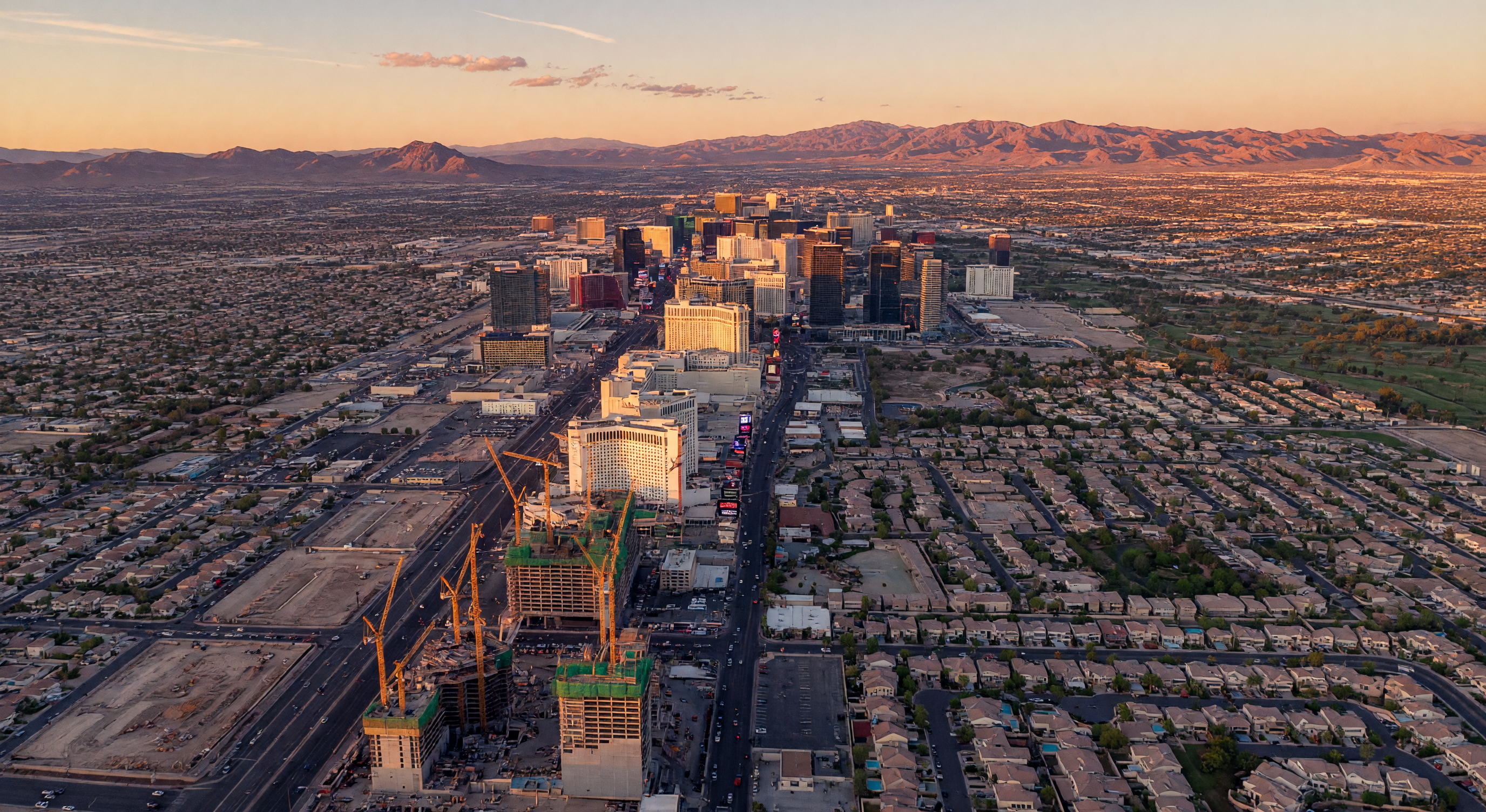
For decades, the story of Las Vegas has been written in neon and gaming tables. The city built its identity, its economy, and its housing market on tourism, hospitality, and entertainment. That foundation is not going away, but the person now leading the organization responsible for attracting new business to Southern Nevada has a clear message: Las Vegas is ready for its next chapter.
Danielle Casey, the new President and CEO of the Las Vegas Global Economic Alliance (LVGEA), arrived in the summer of 2025 with more than 20 years of economic development experience and a mandate to diversify the regional economy. Her appointment matters not just for business recruitment, but for anyone who owns property, is considering a move, or is watching the Las Vegas housing market for investment opportunities.
Who Is Danielle Casey?
Casey is not a newcomer to economic development. She previously served as President and CEO of the Albuquerque Regional Economic Alliance, where she spent nearly five years leading business attraction and retention efforts. Before that, she was Executive Vice President at the Greater Sacramento Economic Council and Economic Development Director for the City of Scottsdale, Arizona.
She holds a Certified Economic Developer designation (CEcD) and is a certified Economic Development Finance Professional (EDFP). In a region that has historically relied on gaming revenue and tourism to drive growth, her background in building diversified economic portfolios is a deliberate signal of where Southern Nevada intends to go.
Why Diversification Matters for Housing
Here is the connection that most headlines miss: economic diversification is one of the most powerful long-term drivers of housing demand. When a region attracts employers in technology, advanced manufacturing, logistics, healthcare, and professional services, it does not just add jobs. It adds a different kind of buyer.
These are professionals relocating with six-figure salaries, looking for homes in the $450,000 to $750,000 range. They are not transient casino workers. They are families putting down roots, enrolling children in local schools, and making long-term investments in the communities where they live. That type of demand stabilizes pricing, reduces volatility, and supports the kind of steady appreciation that benefits existing homeowners.
Las Vegas is already seeing this shift. Corporate relocations in recent years include technology firms like TensorWave Inc., automotive parts distributor Dealer Tire LLC, and consumer wellness brand NeuroGum. These are not household names, but they represent exactly the type of economic activity that the LVGEA is working to attract at scale.
The Current Market Snapshot
As of May 2026, the Las Vegas housing market sits at an inflection point. The median single-family home sale price is hovering near $498,000. Active listings have climbed to approximately 7,400, up significantly from early 2025. Properties are staying on the market for a median of 38 days, and months of supply sits at roughly 4.6, a figure that signals a market transitioning toward balance.
Mortgage rates have pulled back slightly from the highs of 2025, settling in the upper single digits. That modest improvement in borrowing costs, combined with a growing population now estimated at 3.04 million in the metro area, is keeping demand steady even as supply catches up.
What this means practically: the market is not overheating, and it is not crashing. It is finding equilibrium, and economic diversification is one of the forces keeping demand anchored to a solid foundation.
The Big Projects on the Horizon
Beyond corporate recruitment, Las Vegas is betting on several marquee developments that will reshape both the economy and the real estate landscape:
- The Oakland Athletics' new stadium. The MLB franchise's move to Las Vegas brings not just a sports team but year-round economic activity, hospitality revenue, and national visibility. The surrounding area will see significant residential and commercial development.
- The Hard Rock hotel transformation. The former Mirage property is being redeveloped into a Hard Rock-branded resort and casino. The project represents hundreds of millions in investment and will create both construction and permanent jobs.
- Technology-sector expansion. The LVGEA is actively recruiting companies in advanced manufacturing, clean energy, and digital infrastructure. Southern Nevada's low tax environment, available land, and growing workforce make it competitive against higher-cost West Coast markets.
Each of these developments generates housing demand in a different way. Stadium construction creates temporary construction-worker housing needs. Permanent jobs create lasting residential demand. And the national attention from marquee projects draws relocation interest from buyers who might not have previously considered Las Vegas.
What Casey's Priorities Signal
In her public comments since taking the role, Casey has emphasized building on Southern Nevada's existing strengths rather than moving away from them. She has spoken about the importance of regional leadership alignment and creating high-quality job opportunities across multiple sectors.
That language matters because it tells us the strategy is additive, not replacement. Las Vegas is not abandoning its tourism and gaming foundation. It is layering new economic sectors on top of it. For the housing market, that is the best possible scenario: a stable baseline of tourism-driven demand with incremental growth from new industries.
Healthcare, education, logistics, and technology are the sectors Casey has identified as growth targets. Each of these industries brings a workforce with different housing needs, different price points, and different neighborhood preferences. That diversity of demand creates a more resilient market than one that depends entirely on a single industry.
What This Means for You
If you are a homeowner in Las Vegas, Henderson, Summerlin, or Centennial Hills, the long-term outlook is encouraging. Economic diversification supports the kind of sustained demand that keeps property values healthy over time. The current market correction is real, but it is happening on top of a fundamentally stronger economic base than Las Vegas had during previous downturns.
If you are a buyer, the convergence of rising inventory, stabilizing prices, and improving economic fundamentals creates a window. You have more negotiating leverage than buyers have had in years, and you are buying into a market with long-term growth drivers that did not exist five years ago.
If you are an investor, the diversification story is the most compelling case for Las Vegas in a generation. Markets that depend on a single industry are volatile. Markets that attract employers across technology, healthcare, logistics, and professional services build the kind of demand stability that supports both rental income and appreciation.
The arrival of Danielle Casey and the LVGEA's diversification push does not change today's mortgage rate or tomorrow's inventory count. What it does is strengthen the long-term foundation that every real estate decision in Las Vegas rests on. That is the kind of shift worth paying attention to.
If you want to talk through how these economic trends affect your specific situation, I am available for a consultation. Thirty years in this market has taught me that the people who understand the big picture make better decisions than the people who react to headlines.
Over 30 years of Las Vegas real estate experience. Master Certification in Negotiation. Strategic partnerships with Zillow, HomeLight, Veterans United, Google, and Dave Ramsey's referral network.
Full Bio

Need help navigating the current market?
Javier provides data-driven strategy for buyers and sellers in every market condition.
Talk to Javier