Las Vegas Enters Rate-Cut Season: What Falling Mortgage Rates Mean for Summer 2026

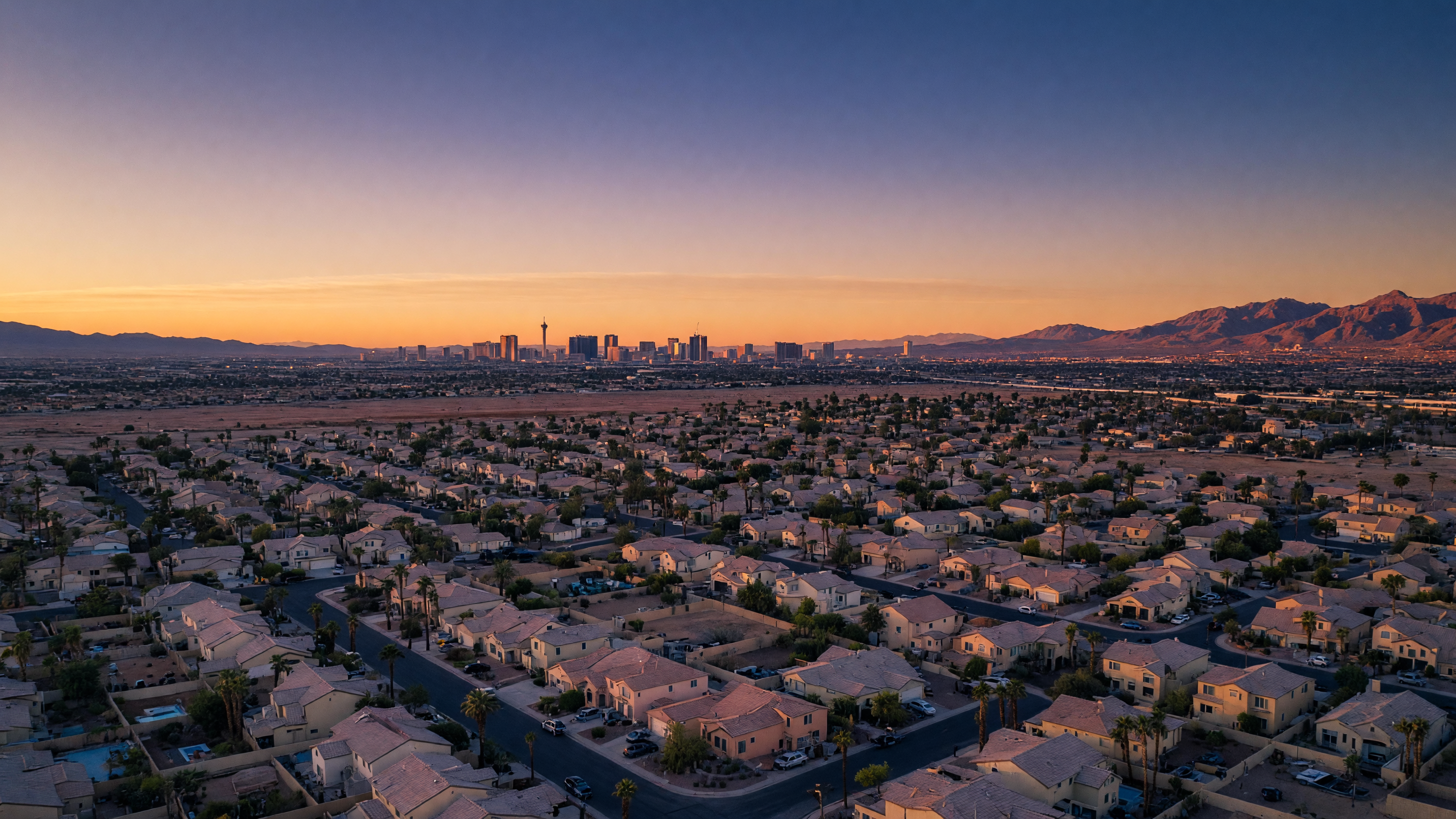
We have entered what I call rate-cut season in Las Vegas. The Federal Reserve held the federal funds rate at 3.50 to 3.75 percent at its June meeting, but the language from the Fed, the direction of the data, and the consensus across every major economic forecast all point in the same direction: more cuts are coming before the end of 2026. For anyone buying, selling, or investing in Las Vegas real estate, the timing and magnitude of those cuts matter enormously — because they are about to reshape the competitive landscape of this market.
After more than 30 years navigating Las Vegas real estate cycles, I can tell you that the period between rate cuts and rate stabilization is where the biggest opportunities live. Right now, mortgage rates in Nevada are sitting in the 5.875 to 6.5 percent range depending on the lender and product. That is down meaningfully from the 6.5 to 7 percent band that defined much of 2025. And the trajectory is what matters: rates are trending lower, and the market is pricing in additional easing. What happens between now and December will determine who buys at the most favorable terms of the year — and who ends up competing for the same inventory after the crowd catches on.
Where Rates Stand Right Now
The 30-year fixed mortgage rate in Nevada averaged approximately 6.47 percent in June 2026, according to Bankrate data. That is a meaningful drop from the 7 percent peaks we saw in late 2024 and early 2025. Fifteen-year fixed rates are hovering around 6.06 percent, and adjustable-rate products are offering even lower entry points for buyers who plan to hold or refinance within a defined window.
The Federal Reserve's current federal funds rate of 3.50 to 3.75 percent represents the result of several cuts implemented in late 2025. The market consensus, reflected in CME FedWatch tool probabilities and forecasts from major banks, points to at least one additional 25-basis-point cut before year-end — with some economists projecting as many as two additional moves that could bring the funds rate to 3.00 to 3.25 percent by early 2027.
For Las Vegas buyers, this means mortgage rates in the mid-to-high 5 percent range are not aspirational — they are achievable within the next two to three quarters. The strategic implication is clear: the buyer who locks in a purchase today at 6.25 percent and refinances to 5.75 percent in twelve months builds equity through both purchase price appreciation and payment reduction. The buyer who waits for 5.75 percent before entering the market will face a larger, more competitive buyer pool and potentially higher purchase prices.
The Demand Surge Is Coming — and It Changes Everything
Every rate cycle I have witnessed over three decades in Las Vegas follows the same pattern. Rates begin to fall. The earliest, most strategic buyers act. Then the broader market recognizes the trend. And finally, a surge of demand compresses inventory, intensifies competition, and shifts negotiating leverage back toward sellers. We are currently between phase one and phase two of that cycle. The question is not whether the demand surge arrives — it is when, and how fast.
The current Las Vegas market has approximately 7,050 to 8,100 active single-family listings depending on the measurement period. Months of supply sit between 3.4 and 4.0 months — a balanced range that has given buyers options and negotiating power for the first time since the pre-pandemic era. But here is the critical dynamic: every 50-basis-point reduction in mortgage rates brings approximately 100,000 to 150,000 additional buyers into the national qualification pool. In a metropolitan area the size of Las Vegas — with its heavy reliance on California in-migration and the demographic pipeline of relocating households — that qualification expansion translates directly into local demand.
When rates drop from 6.5 to 6.0 percent, a buyer who qualified for a $400,000 home at the higher rate now qualifies for approximately $430,000. Multiply that across thousands of households entering the market simultaneously, and you get the exact competitive dynamic that compressed Las Vegas inventory from six months to under two months between 2020 and 2022. The conditions are different now — inventory is higher, price points are elevated, and builders are delivering significant new supply — but the directional impact of falling rates on buyer activity is predictable and consistent.
Job Growth Provides the Economic Foundation
Rate cuts alone do not sustain a housing market. You need employment growth underneath the demand, and Las Vegas has it. Nevada added 34,500 jobs between February 2025 and February 2026, representing 2.2 percent annual employment growth — one of the strongest rates in the Mountain West. The Las Vegas metropolitan area specifically added approximately 19,800 jobs over the trailing twelve months through March 2026.
The sector that matters most for housing demand is technology. Las Vegas is projected to lead the nation in tech employment growth in 2026 at approximately 4 percent, adding 1,529 new technology jobs. That may not sound like a huge number in isolation, but tech jobs carry outsized housing impact. They tend to come with higher salaries, stronger employer benefits, and relocation packages that enable home purchases within the first year of arrival. Every new tech employer that expands in the valley — whether it is a data center, a cybersecurity firm, or a gaming technology company — brings a cluster of high-earning workers who need housing in Henderson, Summerlin, Centennial Hills, or the southwest corridor.
Healthcare, manufacturing, and business services are also expanding. The diversification away from pure hospitality dependence — a trend that the Las Vegas Global Economic Alliance has championed under CEO Danielle Casey — is producing tangible results in the employment data. This matters for housing because diversified employment creates more stable, less cyclical demand. A tech worker or healthcare professional is less likely to be laid off during a tourism downturn than a hospitality employee, and that stability translates into more consistent home purchasing activity.
Population Growth: The Pipeline That Keeps Absorbing Supply
Clark County is approaching 2.4 million residents, with annual population growth running between 1.7 and 2.0 percent. The primary drivers remain the same as they have been for the past decade: in-migration from California, the Pacific Northwest, Texas, and other high-cost states where affordability has become a barrier to homeownership.
Here is what makes this relevant to the rate-cut conversation: California home prices are averaging well above $700,000, with coastal markets like Los Angeles and the Bay Area pushing past $1 million for median-priced homes. A California household that relocates to Las Vegas with $400,000 to $600,000 in equity from a home sale is positioned to purchase a premium property outright or put 30 to 40 percent down on a luxury home in Summerlin or Henderson. That equity transfer is a structural demand driver that operates independently of interest rates — but falling rates amplify it by improving monthly payment affordability for buyers who finance.
The population pipeline ensures that current inventory levels — even at 7,000 to 8,000 active listings — are temporary. We saw this exact dynamic in 2019-2020 when elevated inventory was absorbed within 18 months as in-migration accelerated. The difference now is that new construction is delivering more units, which extends the absorption timeline. But extend does not mean prevent. The supply will be absorbed. The question for buyers is whether they want to purchase during the absorption window or after it.
New Construction: The Wild Card in the Rate Equation
Builders across the Las Vegas valley are delivering a historic pipeline of new homes, particularly in Summerlin's master-planned communities, the southwest corridor, southern Henderson, and Centennial Hills. The Skye Summit community — developed by a consortium including Pulte Homes, Taylor Morrison, KB Home, and Tri-Pointe Homes — is among several large-scale projects that are reshaping the supply side of the equation.
What makes the builder dynamic especially relevant to the rate-cut conversation is the incentive structure. Homebuilders are currently offering rate buydowns, closing cost credits, and upgrade packages worth $15,000 to $30,000 or more. These incentives effectively reduce the buyer's cost of ownership below what the posted interest rate suggests. When mortgage rates drop another 25 to 50 basis points, builders will face a choice: maintain incentive levels to move volume at a time when resale competition is also tightening, or pull back incentives as buyer traffic increases.
My expectation — based on three decades of watching builder behavior through rate cycles — is that incentives will begin contracting by Q4 2026. Builders are businesses with margin targets, and they do not continue offering aggressive concessions once waitlists begin forming. The buyer who captures a 2-1 rate buydown and $25,000 in builder concessions during rate-cut season is getting a better deal than the buyer who waits for rates to drop and finds those incentives gone. That is how the builder cycle works, and it rewards decisive action.
What This Means for Each Submarket
Henderson. Henderson remains the tightest of the major Las Vegas submarkets for resale inventory. Well-priced homes in established neighborhoods — especially in guard-gated communities and the Green Valley corridor — are still trading within 25 to 30 days. As rates drop, Henderson will be one of the first submarkets to see inventory contract because the buyer pool for Henderson homes skews toward move-up buyers and relocating professionals who are rate-sensitive but not rate-dependent. Buyers in Henderson who are targeting this summer should expect increasing competition by September.
Summerlin. The new construction pipeline gives Summerlin the most inventory of any Las Vegas submarket, and that creates a unique dynamic during rate-cut season. As rates drop, the competition between builders and resale sellers intensifies — which benefits buyers who can play both sides against each other. But the builder incentive contraction that I anticipate in Q4 will reduce the advantage for buyers who wait. Summerlin buyers have a window right now to negotiate aggressively with both builders and resale sellers, and that window narrows as the rate trajectory improves.
Centennial Hills. This submarket has seen the most dramatic inventory expansion in the valley, and it offers some of the best negotiating opportunities for buyers right now. New construction delivery over the past 18 months has created genuine competition for resale listings, and homes that have been on the market for 40-plus days are priced for negotiation. As rates drop, Centennial Hills will attract a new wave of first-time and move-up buyers drawn by the price point relative to Henderson and Summerlin. Buyers who position themselves now — before that demand wave materializes — will have the most leverage.
North Las Vegas. With the loosest supply dynamics in the valley at approximately 2.9 months of inventory, North Las Vegas offers buyers the deepest negotiating leverage. The rate-cut environment will benefit this submarket through improved affordability for first-time buyers, who make up a significant portion of North Las Vegas demand. Sellers in North Las Vegas should be pricing competitively from day one to capture this buyer pool before rates improve and competition increases.
The Seller Playbook During Rate-Cut Season
Rate-cut season is not only a buyer story. For sellers, the declining rate environment creates a predictable window of opportunity — but it requires strategic timing and execution. Here is what I am telling my seller clients right now:
List before the demand surge, not after it. A seller who lists in July is competing against the current inventory environment — 7,000-plus active listings, 38-day median marketing times, and buyers who still have negotiating leverage. A seller who lists in October or November will face a tighter buyer pool, but also more competition from other sellers who waited for the same demand improvement. The strategic sweet spot for sellers who want maximum exposure and competitive tension is between now and mid-September, before the broader market recognizes the rate trajectory.
Price at market, not above it. In a market with elevated inventory, aspirational pricing is the most expensive mistake a seller can make. Accurate pricing generates the early traffic, showing activity, and competitive tension that leads to strong outcomes. Overpricing generates days-on-market, price reductions, and buyer skepticism. In the current environment, the first 14 days of a listing's life determine its trajectory. Price it right from day one, and the rate-cut environment will work in your favor as buyer qualification improves.
Invest in preparation and presentation. With 7,000 to 8,000 active listings competing for buyer attention, the homes that stand out are the ones that are professionally staged, photographed, and marketed. This is not optional in the current market — it is the difference between selling at or above asking within 30 days and watching your listing age past the median into discount territory. My marketing partnerships with Zillow, HomeLight, Veterans United, and Google, combined with a buyer database of over 32,000 qualified prospects, are designed to generate demand rather than wait for it.
The Forward-Looking Case: Why Las Vegas Wins in a Lower-Rate Environment
Beyond the immediate tactical dynamics, the structural case for Las Vegas housing in a falling-rate environment is compelling. The valley is benefiting from multiple converging tailwinds: sustained population growth approaching 2.4 million residents, diversified job creation at 2.2 percent annually, technology sector growth leading the nation at 4 percent, and a series of transformative infrastructure projects — including the $12 billion Brightline West high-speed rail connection to Los Angeles and the relocated Oakland Athletics ballpark on the Tropicana site — that will reshape the economic landscape over the next three to five years.
These are not speculative developments. They are funded, permitted, and under construction or in advanced planning. The Brightline West connection alone will reduce the Los Angeles to Las Vegas travel time to approximately two hours, making Las Vegas a viable commuter or second-home market for Southern California professionals. The Athletics stadium will anchor a new entertainment and residential district on the Strip's south end. Both projects will generate thousands of construction and permanent jobs, attract ancillary investment, and increase the profile of Las Vegas as a diversified metropolitan economy.
When you combine these structural tailwinds with a falling interest rate environment, the result is a housing market with both near-term momentum and long-term appreciation potential. Las Vegas is not a market where you wait for perfect conditions — the conditions are favorable now, and the trajectory is moving in the right direction.
Bottom Line: Position Before the Market Does
Rate-cut season in Las Vegas is not a hypothetical. It is here. Mortgage rates have already declined by 50 to 100 basis points from their peaks. The Fed is signaling additional easing. And the housing market — with elevated inventory, motivated builders, and flat sales volume — is offering the most buyer-favorable conditions we have seen since before the pandemic.
Those conditions will not last. They never do. Every rate cycle I have navigated in 30-plus years of Las Vegas real estate has followed the same arc: rates drop, strategic buyers act, the broader market follows, inventory contracts, competition intensifies, and negotiating leverage shifts. The buyers and sellers who position themselves during the drop — before the surge — consistently achieve better outcomes than those who wait for confirmation.
If you want to discuss what the rate-cut trajectory means for your specific situation in Las Vegas, Henderson, Summerlin, or Centennial Hills, I am available for a no-obligation consultation. The window is open. The rates are moving. And the data tells us clearly what comes next.
For Agent Image / WordPress (tmtluxury.com)
Falling Rates, Rising Demand: What Las Vegas Homebuyers Need to Know for Summer 2026
Mortgage rates are dropping in Las Vegas and the Fed is signaling more cuts. See what this means for buyers, sellers, and investors heading into summer 2026.
/falling-rates-las-vegas-summer-housing-2026
Different phrasing and slug avoid duplicate SEO penalties when cross-posted to tmtluxury.com.
For Lofty CRM
Rates Are Dropping — Here's Why Vegas Buyers Should Move Now
Fed cuts are here. Mortgage rates are falling. Learn why waiting could cost Las Vegas buyers more than acting today.
/rates-dropping-vegas-buyers-move
Shorter, punchier title and description optimized for Lofty blog posts that double as email drip content.
Over 30 years of Las Vegas real estate experience. Master Certification in Negotiation. Strategic partnerships with Zillow, HomeLight, Veterans United, Google, and Dave Ramsey's referral network.
Full Bio

Rates are moving — position yourself before the market does
Javier monitors the market daily and can translate the data into a strategy tailored to your goals. Schedule a consultation today.
Talk to Javier