Las Vegas Apartment Construction Hits 4-Year Low: What the Supply Crunch Means for Home Buyers

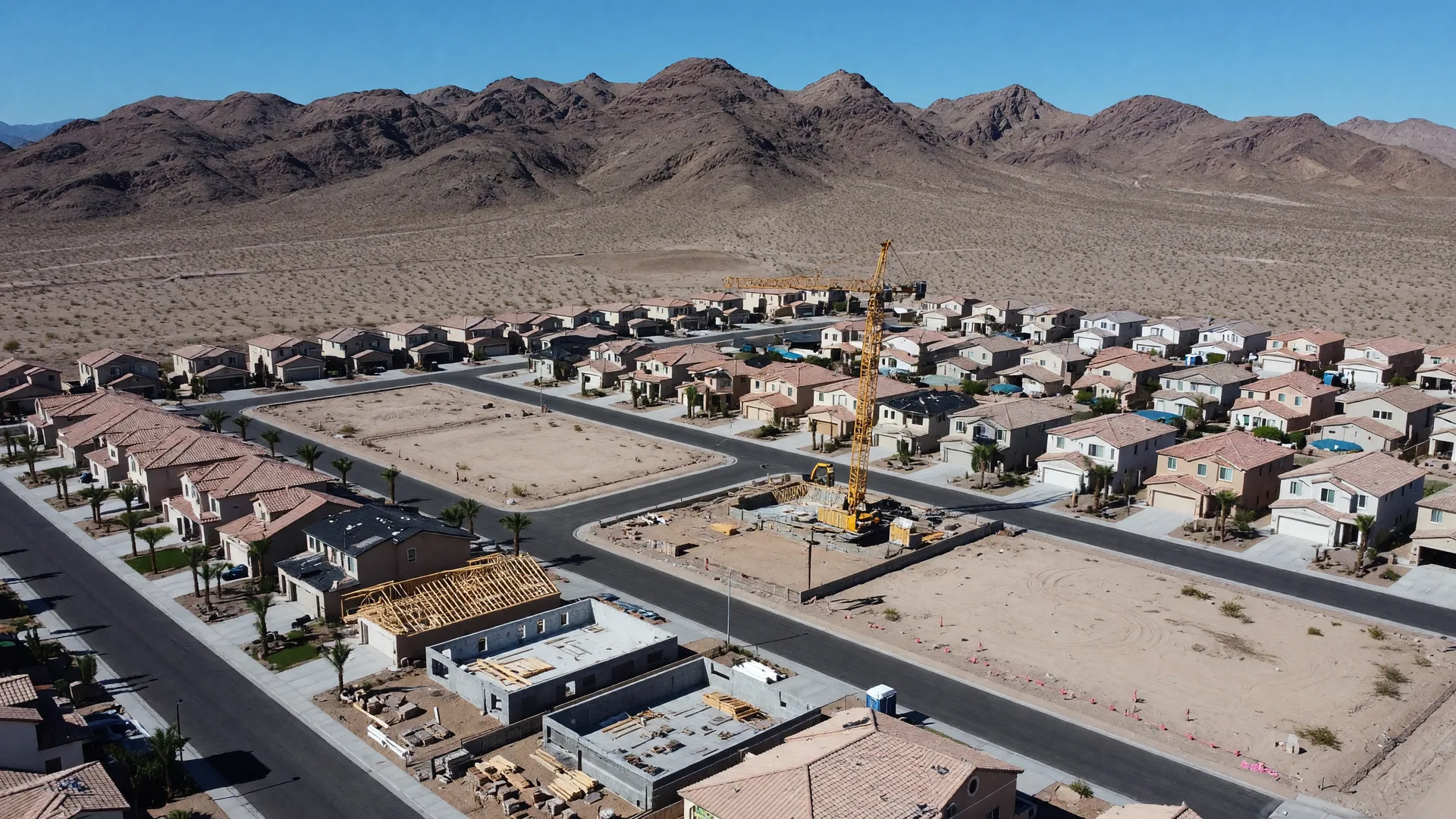
Two stories emerged from the Las Vegas business pages on the same July morning, and anyone paying attention to the housing market needs to read them together. The first: Clark County's apartment construction pipeline has fallen to its lowest level in four years, with just 3,400 units expected to deliver this year. The second: population growth in the county has slowed notably, pushing the projected three-million-resident milestone roughly a decade further out than earlier forecasts.
At first glance these headlines look like a matched set of bearish signals. Less construction, slower growth — a market taking a breather. But the reality underneath the numbers is more nuanced, and for buyers and investors in the Las Vegas single-family home market, the combination of these two trends may actually be a quiet bullish signal for the rest of 2026 and beyond.
The apartment pipeline is shrinking at a time when Nevada still leads the nation in job growth, mortgage rates are slowly easing, and the valley's existing-home inventory is hanging in a neutral-to-slightly-buyer-friendly range. When you connect those dots, a clear picture emerges: the rental supply crunch that is building today will push more demand into the for-sale market tomorrow.
The Apartment Pipeline: What the Numbers Actually Say
According to a report from the Las Vegas Review-Journal published July 22, apartment construction in the valley has slowed to roughly 3,400 units for the year — the lowest volume since 2021, when the market was still emerging from pandemic-era supply constraints. To put that in perspective, Las Vegas delivered more than 6,000 multifamily units in 2023 and roughly 5,500 in 2024. The 2026 projection represents a drop of nearly 40 percent compared to the recent average.
Why the slowdown? The same forces that have reshaped single-family construction over the past two years are now hitting the multifamily sector: higher financing costs, tighter lending standards, rising insurance premiums, and a more cautious development community that is waiting for clearer signals on rent growth and occupancy before breaking ground on new projects.
The timing matters. Over the past three years, the apartment boom in Las Vegas absorbed a significant share of the valley's inbound migration. Renters moving from California and other high-cost markets found a wide selection of new Class A units across the southwest corridor, Henderson, and Summerlin. That buffer is now thinning. With fewer new units coming online and existing occupancy rates holding steady above 93 percent across the valley, the rental market is set to tighten through 2027 and into 2028.
Population Growth: The Story Behind the Story
The same report that detailed the apartment pipeline slowdown also carried news from the UNLV Center for Business and Economic Research: Clark County's population growth rate has decelerated more than earlier projections anticipated. The three-million-resident threshold, once expected within the next decade, is now roughly ten years further out.
On the surface, slower population growth sounds like a headwind for housing demand. Fewer new residents means fewer new households competing for homes. But the composition of that growth matters enormously — and here the data tells a different story.
Even with the overall growth rate moderating, nearly one-third of all out-of-area home searches for the Las Vegas Valley originated in Southern California, specifically Los Angeles and San Jose, according to market data cited in recent reports. These are not renters looking for an apartment. They are equity-rich homeowners from expensive coastal markets searching for single-family homes, townhomes, and condos in a city where their dollar goes significantly further. The people who are still moving to Las Vegas in 2026 are disproportionately buyers, not renters. And the rental supply crunch will only accelerate that trend.
Job Growth: The Demand Engine That Is Not Slowing Down
If population growth is the rearview mirror, job growth is the windshield. And the view through the windshield is as bright as any point in the past decade.
Nevada added 25,600 jobs over the past twelve months, a 2.2 percent growth rate that led the entire nation. The Las Vegas metro alone accounted for 3,000 new positions added between May and June, according to the Nevada Department of Employment, Training and Rehabilitation. The leisure and hospitality sector — the backbone of the local economy — added 1,700 jobs statewide. Tech employment in the Las Vegas metro is projected to grow 4 percent in 2026, adding over 1,500 new high-wage positions.
The unemployment rate ticked down to 5.3 percent, still among the highest in the country, but that number is deceptive. It reflects a labor force that is growing faster than the job market can absorb in the short term — people are moving to Las Vegas and entering the workforce, which statistically keeps the unemployment rate elevated even as absolute employment hits new highs. It is a growth problem, not a contraction problem.
Every one of those new jobs represents a household that needs shelter. With the apartment pipeline shrinking, more of those households will turn to the for-sale market. That dynamic is already visible in the data: metro-wide active residential listings stood at approximately 14,868 in early July, with new weekly listings holding above 1,000. The supply is there, but the trajectory suggests that the window of ample choice will narrow as more job-fueled demand enters the market.
What This Means for Buyers in Henderson, Summerlin, and Centennial Hills
For buyers who are actively searching today — particularly in the suburban submarkets where families and professionals tend to concentrate — the current environment presents a rare alignment. Mortgage rates have eased slightly into the 6.48 to 6.54 percent range for a 30-year fixed loan. Inventory is elevated relative to the past three years. Builder incentives on new-construction homes are running between $30,000 and $80,000 in concessions, effectively lowering the purchase price without triggering a decline in list-price data.
In Henderson, new construction in the south corridor and around Cadence and Inspirada continues to offer aggressive rate buydowns and closing cost credits. In Summerlin, the resale market is seeing more days on market than it did a year ago, which means motivated sellers are increasingly open to reasonable offers. In Centennial Hills, the upper end of the market — homes priced above $600,000 — is experiencing the softest conditions, giving buyers leverage they have not had since before the pandemic.
The common thread across all three submarkets is that the buyer leverage that exists today is unlikely to increase. The apartment construction pipeline will not turn around quickly — it takes 18 to 24 months to bring a multifamily project from approval to occupancy, and developers are not rushing to start new ones at today's construction financing costs. The rental market will tighten, and as it tightens, renters will increasingly shift to buying. That demand will absorb the current inventory surplus and reduce buyer negotiating power.
Anyone who is waiting for a better buying environment — lower prices, less competition, more leverage — should understand that the conditions peaking right now are the result of a temporary supply-demand lag. The supply side (elevated inventory) is present. The demand side (apartment dwellers transitioning to homeownership) is building. When those two curves cross, the window closes.
What Sellers Need to Know: The Window Is Open, but the Clock Is Ticking
For sellers, the apartment construction story is a double-edged sword. In the short term, the elevated inventory means more competition for buyer attention. Pricing must be precise, presentation must be professional, and the marketing reach must extend beyond the local MLS to capture the national buyer pool that is actively searching for Las Vegas properties.
But the medium-term outlook is pro-seller. A shrinking rental supply means more households will enter the purchase market. Over 32,000 qualified buyers in my database are already showing activity, and my partnerships with Zillow, HomeLight, Veterans United, Google, and Dave Ramsey's referral network give every listing exposure to an audience over 42 million strong. Homes that are priced correctly and marketed aggressively today will benefit from rising demand later this year and into 2027.
The sellers who struggle in this market are the ones who anchor to 2021 or 2022 pricing expectations. The market has reset. Buyers have options, and they are exercising those options with discipline. But the apartment pipeline data tells us that the balance is shifting. The next move — in Henderson, Summerlin, Centennial Hills, and across the valley — is toward a seller's advantage. Getting positioned before that shift accelerates is the smart play.
The Investor Angle: Multifamily Scarcity Points to Single-Family Appreciation
For real estate investors tracking the Las Vegas market, the apartment construction slowdown is one of the most significant data points of 2026. Multifamily supply constraints historically correlate with above-average rent growth in the following 12 to 24 months. Stronger rent growth increases cap rates on existing rental properties and makes single-family rentals — both for-sale and build-to-rent — more attractive as an asset class.
Investors who are considering adding Las Vegas rental properties to their portfolio should be watching the apartment pipeline data as closely as they watch interest rates. A market where new rental supply is falling while employment is rising is a market where rental demand will outpace supply. That is the fundamental condition for property value appreciation in the single-family rental space.
The southwest corridor, where much of the valley's new development is concentrated, is the most exposed to this dynamic. Areas within commuting distance of the major employment centers — the Strip, the tech corridor around the Las Vegas Tech Park, and the growing data center cluster — will see the earliest effects of the tightening rental market.
The Bottom Line: Read the Two Headlines Together
The apartment construction slowdown and the population growth deceleration are not contradictory signals. They are two sides of the same coin. Las Vegas is maturing from a boom-and-bust growth market into a steadier, more sustainable trajectory. The explosive population gains of 2020 to 2023 — largely driven by pandemic-era remote work migration — are normalizing. Meanwhile, the job market is diversifying, the economy is broadening, and the housing supply is adjusting to a new equilibrium.
For buyers, the message is straightforward: the conditions that give you leverage today are a function of a rental supply cycle that is already turning. The apartment pipeline data is a leading indicator. By the time you feel the effects at the negotiating table, the window will have narrowed.
For sellers, the message is equally clear: the fundamentals that support property values in Las Vegas — job growth, economic diversification, in-migration of equity-rich buyers — remain intact and are strengthening. Get your pricing and presentation right today, and you will benefit from the demand surge that the apartment data says is coming.
For investors, the multifamily supply crunch is a signal to act. When rental supply tightens, single-family values follow. And in a market where the job growth rate leads the nation, that is a bet worth evaluating.
I have spent over three decades navigating the Las Vegas real estate market through every kind of cycle. What I see right now is not a market in decline. It is a market in transition. Supply is shifting between sectors, demand is building beneath the surface, and the opportunity for well-positioned buyers, sellers, and investors is as compelling as any I have seen in the past five years. If you would like to discuss what these trends mean for your specific situation — whether in Henderson, Summerlin, Centennial Hills, or anywhere in Clark County — I am ready to talk. The data is in front of us. The question is how you act on it.
For Agent Image / WordPress (tmtluxury.com)
Las Vegas Apartment Construction Slows to 4-Year Low — Home Buyer Impact
Only 3,400 apartment units are coming to Las Vegas this year. With job growth leading the nation, here is how the rental supply crunch reshapes the housing market.
/las-vegas-apartment-pipeline-supply-crunch-2026
Different phrasing and longer slug avoid duplicate SEO penalties when cross-posted to tmtluxury.com.
For Lofty CRM
Vegas Apartments Are Drying Up — What Buyers Need to Know
Apartment construction hits a 4-year low in Vegas. With #1 job growth, renters will shift to buying sooner than you think.
/vegas-apartment-supply-drops
Shorter, punchier title and description optimized for Lofty blog posts that double as email drip content.
Over 30 years of Las Vegas real estate experience. Master Certification in Negotiation. Strategic partnerships with Zillow, HomeLight, Veterans United, Google, and Dave Ramsey's referral network.
Full Bio
The supply shift is underway. Are you positioned for it?
Javier watches every data point so you do not have to. Schedule a consultation to discuss how the apartment pipeline slowdown affects your buying, selling, or investing plan.
Talk to Javier