How to Navigate Home Inspection Negotiations in Las Vegas Without Losing the Deal

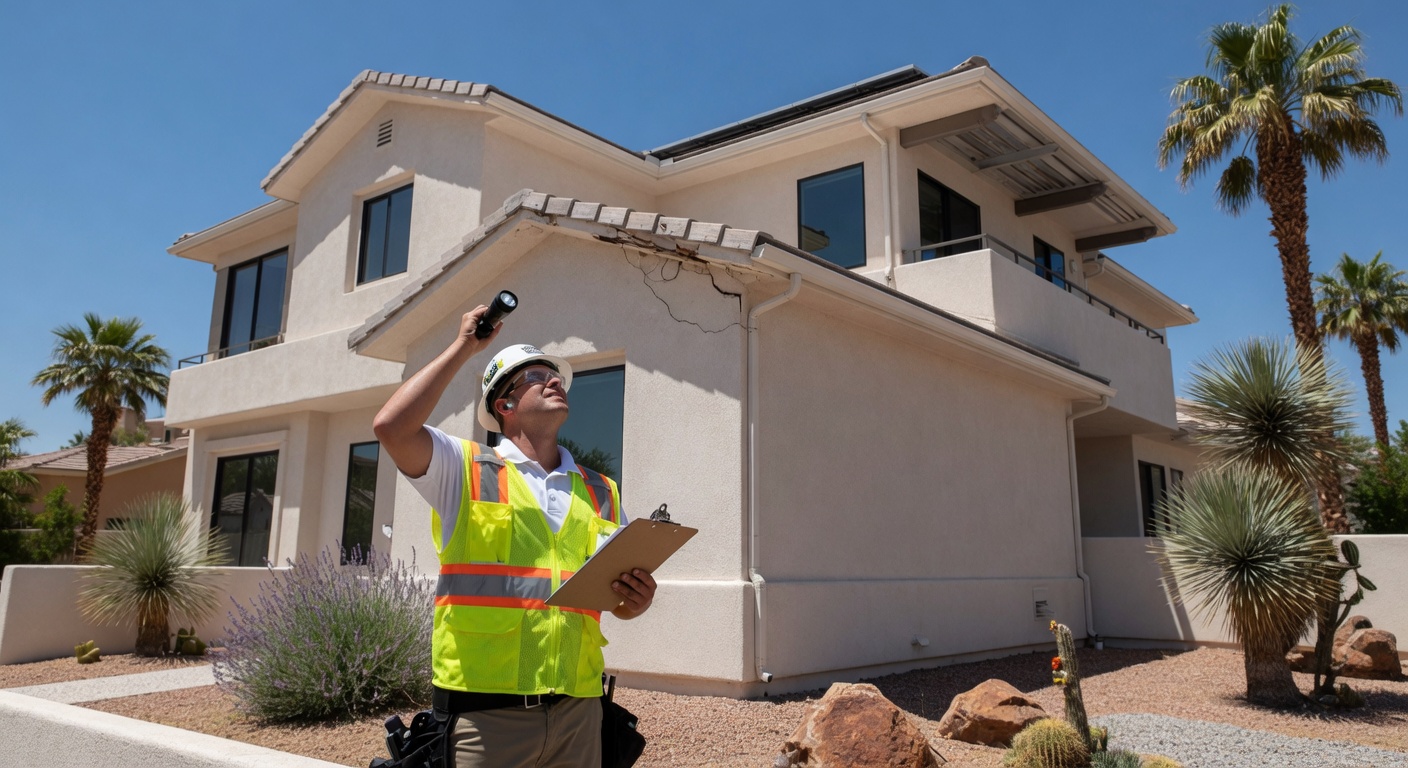
In a market where the median Las Vegas home price sits near $490,000 and inventory has climbed to over 7,500 active listings, the home inspection has become one of the most consequential moments in any transaction. For buyers, it is the point where you discover what you are actually purchasing. For sellers, it is the moment when a signed deal can unravel. How both sides handle inspection results determines whether a transaction closes or collapses.
Over 30 years of writing and negotiating deals in Las Vegas, I have watched more transactions fall apart over inspection findings than over any other single factor. The problems are almost never fatal. The negotiations around them are where deals die. Here is how to navigate that process from either side of the table.
The Las Vegas Inspection Landscape Is Different
Las Vegas homes face a specific set of inspection challenges that buyers and sellers in other markets do not encounter. The desert climate creates conditions that are uniquely punishing on building materials, and the rapid pace of development over the past two decades means a significant portion of the housing stock was built under tight timelines with varying levels of quality control.
The most common findings in a Las Vegas inspection report include HVAC system wear from relentless summer heat, stucco exterior cracks from thermal expansion and settling, roof membrane deterioration on flat or low-slope sections, and plumbing issues ranging from aging galvanized pipes in older homes to improperly sealed connections in newer construction. Drainage and grading problems are also frequent, particularly in homes built on slopes or in areas where desert soil shifts seasonally.
None of these findings are unusual. Most of them are maintenance items rather than structural defects. But in the heat of a negotiation, with both parties emotionally invested, the difference between a maintenance item and a deal-breaker often comes down to how the issue is framed and who controls the narrative.
For Buyers: How to Use Inspection Data Without Overplaying Your Hand
The biggest mistake buyers make after an inspection is treating every finding as a negotiation weapon. When you submit a repair request that lists fifteen items ranging from a cracked outlet cover to a failing HVAC compressor, you dilute the impact of the items that actually matter. The seller and their agent see a buyer who is either uninformed about what is normal or looking for reasons to chip away at the price. Neither impression helps you close.
Instead, categorize the findings into three tiers. The first tier is safety and structural issues: active roof leaks, electrical hazards, broken gas lines, foundation cracks, or evidence of mold. These items require attention regardless of market conditions, and any reasonable seller will address them. The second tier is significant mechanical or functional failures: an HVAC system past its expected lifespan, a water heater approaching end of life, plumbing that needs repair. These items have quantifiable costs and should be part of a targeted repair request or price adjustment. The third tier is cosmetic or deferred maintenance: minor stucco cracks, weathered caulking, worn paint. These are items you can handle yourself and should not be part of your negotiation.
When you present your inspection response, lead with the data. Get actual repair estimates from licensed contractors, not just the inspector's general comments. A two-page summary that says "HVAC needs replacement, estimated cost $8,500 from three licensed contractors" is infinitely more persuasive than a one-page list that says "inspectors recommend HVAC evaluation." Sellers respond to specificity because specificity tells them exactly what resolution looks like.
In the current market, with inventory at roughly 4.5 months of supply, buyers have more leverage than they have had in years. But leverage does not mean you should use all of it at once. A measured, data-driven inspection response signals that you are a serious buyer who wants to close, not someone looking for an exit. That distinction matters because sellers are more willing to make concessions for a buyer they believe will follow through.
For Sellers: How to Protect Your Deal When the Report Arrives
If you are selling a home in Las Vegas, you should assume the inspection will find something. Homes in this market, particularly those built before 2010, almost always have HVAC, plumbing, or roofing concerns that appear in the report. The key is not to avoid findings. It is to manage your response so the deal keeps moving.
The worst thing a seller can do is react defensively. When a buyer submits a repair request, the natural response is to minimize, explain away, or refuse. But from the buyer's perspective, a defensive seller signals that the rest of the transaction will be adversarial. In a market with alternatives, that buyer walks, and you are back on the market with an inspection disclosure that now makes every future buyer more cautious.
Instead, evaluate the buyer's request against three questions. First, are the items they are requesting legitimate? If the HVAC is genuinely at end of life and the buyer has a contractor estimate confirming it, that is a reasonable request even if you disagree with the amount. Second, is the total request proportional to the deal? A buyer asking for $4,000 in repairs on a $490,000 home is asking for less than one percent. That is a negotiation, not an obstruction. Third, is this buyer likely to close if you make concessions? A strong buyer with full financing approval who asks for reasonable repairs is worth accommodating. A buyer who seems uncertain, keeps adding conditions, or whose requests keep growing is a different calculation.
In a market where homes are averaging 37 to 38 days on the market, every day you spend in a stalled inspection negotiation costs you. The carrying costs are real: mortgage payment, insurance, utilities, HOA fees. A seller who spends two weeks fighting over $3,000 in repairs is spending more in carrying costs than the repairs would cost. Sometimes the most profitable move is to concede, keep the deal on track, and close.
The Middle Ground: Repair Credits vs. Actual Repairs
One of the most effective tools in an inspection negotiation is the repair credit. Instead of the seller completing repairs before closing, the seller provides a financial credit to the buyer at closing, and the buyer handles the repairs after they own the home. This approach solves several problems simultaneously.
For sellers, a credit eliminates the risk of disputed repair quality. You do not have to manage contractors, schedule work, or worry that the buyer will be unhappy with the results. You provide the dollar amount and move on. For buyers, a credit provides control. You choose the contractor, you manage the scope, and you ensure the work meets your standards. In many cases, buyers can combine the credit with their own resources to address issues more thoroughly than the seller would have.
The mechanics are straightforward. The credit appears on the closing statement as a seller concession, reducing the net proceeds to the seller. The buyer applies the credit toward the agreed-upon repairs after closing. Both parties should document the credit amount and the specific items it covers in writing. This eliminates ambiguity and gives both sides a clear resolution.
I have closed hundreds of transactions using repair credits, and they consistently produce better outcomes for both parties than contentious repair negotiations. The key is being specific about what the credit covers. A credit described as "HVAC system replacement and roof membrane repair, not to exceed $12,000" protects both sides. A vague credit described as "buyer to address inspection items" invites disagreement.
When the Inspection Reveals a Bigger Problem
Occasionally, an inspection reveals something significant: a foundation issue, active water intrusion, evidence of unpermitted work, or a structural defect that changes the value proposition of the home. When that happens, both parties need to step back and evaluate the situation with clear eyes.
For buyers, this is where your inspection contingency exists for a reason. If the findings are material and the cost to remedy exceeds your comfort zone, you have the right to walk away. That is not a failure of the negotiation. That is exactly what the contingency is designed to protect. The key is acting quickly and making a clear, documented decision rather than letting the contract languish in limbo while both sides wait for the other to blink.
For sellers, a major finding means being honest with yourself about the home's condition and pricing reality. If the inspection reveals $40,000 in needed structural work, that number is going to surface in every subsequent transaction. Addressing it proactively, either through repair or price adjustment, is almost always more cost-effective than relisting and going through the process again with a new buyer who will hire their own inspector and find the same issue.
In my experience, transparency after a difficult inspection builds trust and preserves deals. Buyers do not expect perfection. They expect honesty. When a seller acknowledges a genuine problem and offers a fair resolution, most buyers will meet them halfway because they have already invested time, emotion, and money in this home.
The Numbers That Matter
Let me put real context on this. In the Las Vegas market today, the average home price near $490,000 means that a typical inspection negotiation involves disputes over $2,000 to $15,000 in repairs. That represents roughly 0.4 to 3 percent of the transaction value. Yet this small percentage is where the majority of deals stall or collapse.
A buyer who negotiates a $6,000 credit on a $490,000 home is saving 1.2 percent of the purchase price. A seller who concedes that $6,000 is preserving a transaction worth $490,000, and their carrying cost for every additional week on the market is roughly $2,500 to $3,000 between mortgage, insurance, and utilities. The math favors resolution in almost every scenario where the finding is legitimate and the amount is reasonable.
The transactions that collapse over inspection findings almost always share a common trait: one or both parties treated the negotiation as a competition rather than a problem-solving exercise. The buyer who submits an unreasonable repair request, or the seller who refuses any concession at all, is optimizing for ego rather than outcome. In 30 years, I have never seen ego produce a better closing price.
Pre-Inspection Strategy for Sellers
The smartest move a seller can make is to address the most common inspection issues before listing. A pre-listing inspection, while not standard in Las Vegas, is becoming more common among sellers who understand that transparency accelerates sales. If you know your HVAC is 15 years old and your roof membrane has wear, fix or disclose those items before a buyer's inspector discovers them.
At minimum, have your home serviced by licensed professionals before listing. Have the HVAC system serviced and documented. Have a roofer inspect and repair any obvious issues. Have a plumber check the water heater and supply lines. These pre-sale interventions typically cost $500 to $1,500 and can prevent $5,000 to $15,000 in negotiated repair requests from buyers who are already looking for reasons to negotiate in a market with leverage.
In a market with 4.5 months of inventory, every advantage matters. A home that comes to market with recent service documentation, a pre-listing inspection report, and evidence of proactive maintenance will generate stronger offers and fewer post-inspection repair requests. That translates directly to faster closings and higher net proceeds.
Moving Forward With Confidence
The home inspection is not an adversary. It is an information tool that, when handled correctly, protects both the buyer and the seller. Buyers who use inspection data strategically and sellers who respond with reason and transparency will close more deals, close them faster, and close them at better terms.
If you are buying or selling a home in Las Vegas, I can guide you through the inspection negotiation process from start to finish. Thirty years of negotiating in this market has given me a clear understanding of what is reasonable, what is not, and how to find resolution when the inspection report creates tension. Every deal I work is designed to reach the closing table with both sides satisfied with the outcome.
Over 30 years of Las Vegas real estate experience. Master Certification in Negotiation. Strategic partnerships with Zillow, HomeLight, Veterans United, Google, and Dave Ramsey's referral network.
Full Bio
Need help navigating an inspection negotiation?
Javier's 30 years of negotiation experience means your deal stays on track. Call today or schedule a consultation.
Get Expert Guidance